What is in an electrolyte drink?
Electrolytes are minerals that carry an electrical charge in body fluids: mainly sodium, potassium, chloride and magnesium, plus calcium. An electrolyte drink is water with some of these salts, often with sugar or flavourings. Sodium is the one lost in the greatest amounts in sweat.
The main electrolytes and where they come from
| Electrolyte | Role | Main food sources |
|---|---|---|
| Sodium | Essential for blood volume, acid-base balance and nerve signals, according to WHO | Salt, bread, cheese, processed foods |
| Potassium | Contributes to normal muscle function, nervous system function and normal blood pressure (EU-authorised wording) | Vegetables, fruit, beans, lentils, potatoes, bananas, citrus, dried apricots, milk, yoghurt |
| Magnesium | Contributes to electrolyte balance and normal muscle function (EU-authorised wording) | Leafy greens, nuts, legumes, whole grains |
| Chloride | Contributes to normal digestion through stomach acid (EU-authorised wording) | Table salt (sodium chloride) |
WHO notes that sodium deficiency is extremely unlikely in healthy people, while too much sodium raises blood pressure. That is the key to the whole topic: electrolytes in a glass are a tool for specific situations, not a better kind of water.
Electrolyte drink benefits: when water is enough and when they help
How much you lose depends on you. A 2017 review of sweat testing in athletes found sweat rates usually between 0.5 and 2.0 litres an hour during exercise, and whole-body sweat sodium around 10 to 70 mmol per litre, or roughly 230 to 1,610 mg of sodium per litre of sweat (our conversion). Both vary widely with heat, effort, acclimatisation, fitness, body size and diet. For example, someone sweating 1.5 litres an hour for two hours at 40 mmol/L loses 3 litres of fluid and about 2.8 g of sodium (our calculation).
- Water is usually enough: ordinary days, office work in air conditioning, a walk or a gym session under an hour.
- Electrolytes can help: sport lasting more than an hour in the heat, football or cycling on summer evenings, long outdoor shifts, or heavy sweating that leaves salt marks on clothes.
- Neither, but an oral rehydration solution: diarrhoea or vomiting. WHO says diarrhoea should be treated with oral rehydration solution, a precise mix of clean water, sugar and salt sold in pharmacies.
The rules give a clue too. The only EU-authorised claim for sports drinks says carbohydrate-electrolyte solutions contribute to the maintenance of endurance performance during prolonged endurance exercise, and only if they contain 460 to 1,150 mg of sodium and 80 to 350 kcal of carbohydrate per litre. Real electrolyte drink benefits therefore concern long efforts, not daily sipping at a desk.
Outdoor work in the Gulf. A study at 10 construction sites in Al-Ahsa, Saudi Arabia, from June to September 2016 found workers exposed to excessive heat stress indoors and outdoors for much of the day. The midday outdoor work ban (12 to 3 pm) was not enough on its own: the highest exposure was outdoors from 9 am to noon. For these workers, cool water, shade and breaks come first, and electrolytes can be part of their drinking on long shifts.
Electrolytes in Ramadan: from iftar to suhoor
The Islamic year is 11 days shorter than the solar year, so Ramadan moves through the seasons and in some years falls in summer, with long fasting hours in strong heat. A 2023 review by a Kuwaiti nephrologist on fasting in hot weather focused on people with chronic kidney disease, on dialysis or with a transplant, and stressed that the evidence is still limited. In healthy people the picture is more reassuring: a 2023 study of 73 healthy medical staff who fasted for at least 20 days found no change in total body water, measured by bioimpedance, with weight down about 1 kg, mostly fat.
- Spread your water between iftar and suhoor rather than drinking a lot at once.
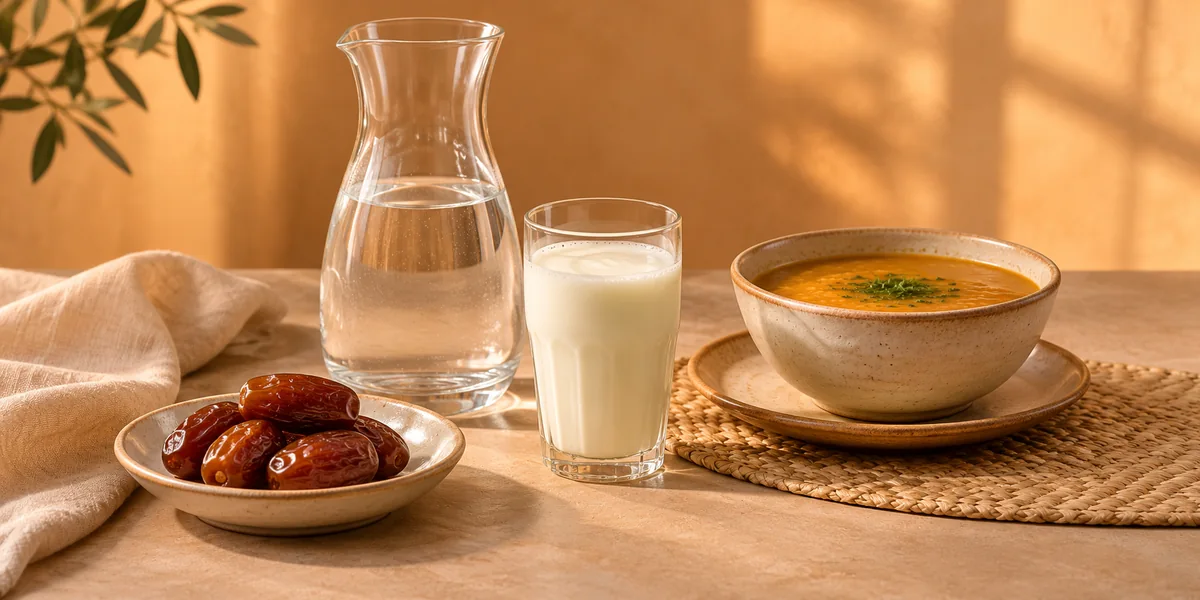
- Break the fast with water and dates, then a meal with vegetables, fruit, lentils or laban.
- Go easy on very salty dishes and on coffee or tea at suhoor.
- Sugar-free electrolytes at suhoor may suit people who work outdoors, but it does not replace water.
- With diabetes, kidney disease or blood pressure medicines, see your doctor before Ramadan.
Severe dizziness, confusion or fainting during the fast are a medical emergency, not a reason to wait for iftar.
Signs of dehydration and heat stroke: when it is an emergency
According to MedlinePlus, the US National Library of Medicine's health site:
- Mild to moderate dehydration: thirst, dry or sticky mouth, urinating little, darker yellow urine, dry cool skin, headache, muscle cramps.
- Severe dehydration: no urine or very dark urine, irritability or confusion, dizziness, rapid heartbeat and breathing, sunken eyes, listlessness, loss of consciousness.
- Heat stroke: body temperature above 40°C with confusion, irrational behaviour, seizures, slurred speech or unconsciousness. Sweating may stop.
WHO calls heatstroke a medical emergency with a high death rate. Call an ambulance: 997 in Saudi Arabia, 998 in the UAE. While waiting, MedlinePlus advises lying the person down somewhere cool, raising the feet, cooling the skin with wet cloths and a fan, and placing cold compresses on the neck, groin and armpits. Give sips of a drink only if the person is alert, and nothing by mouth if they are vomiting or unconscious. Do not give salt tablets or fever medicines such as aspirin or paracetamol.
Children, older adults, people with heart disease, and anyone taking beta-blockers, diuretics or some medicines for depression are more at risk, as are people not used to the heat.
Salt, blood pressure and kidneys
WHO recommends less than 2,000 mg of sodium a day for adults, which is under 5 g of salt, just under a teaspoon. The world average in 2021 was 4,278 mg, more than double. So a daily electrolyte supplement on top of a salty diet adds sodium most people do not need, and high sodium intake raises blood pressure.
- High blood pressure or a low-salt diet: check the sodium per serving and ask your doctor before using electrolytes regularly.
- Kidney disease: potassium can build up in the blood when the kidneys work poorly, which can cause dangerous heart rhythms. People on dialysis often follow a potassium-restricted diet set by their doctor.
- Some blood pressure and heart medicines: ACE inhibitors, angiotensin receptor blockers and potassium-sparing diuretics such as spironolactone can raise blood potassium, according to MedlinePlus. Ask your pharmacist before adding potassium.
- Salt substitutes: WHO suggests lower-sodium salt substitutes containing potassium, but with kidney disease or these medicines, ask your doctor first.
- Magnesium: it is also cleared by the kidneys; see our magnesium guide and our best magnesium ranking.
If your doctor has limited your fluids or salt for a heart or kidney condition, that advice comes before anything you read about hydration.

Children, pregnancy and older adults
- Children: they heat up faster and do not always ask for water. Do not give adult electrolyte products without a doctor's advice. For diarrhoea, WHO recommends oral rehydration solution with a course of zinc; signs of severe dehydration in a child include lethargy, sunken eyes, drinking poorly and skin that goes back very slowly when pinched.
- Pregnancy and breastfeeding: drink regularly, avoid hard effort in the heat, and ask your doctor before any supplement.
- Older adults: they are more at risk of dehydration according to MedlinePlus, and many take medicines that affect sodium and potassium, so medical advice comes first.
Sport and long efforts: how to know what you lose
According to the 2017 review, the simplest and most accurate way to estimate sweat loss is the change in body weight during exercise. Weigh yourself in light clothing before and after training, and add what you drank during it: each kilogram lost is roughly a litre of sweat. The review warns about errors such as sweat trapped in clothing, so repeat the test in similar conditions to learn your own needs instead of relying on general figures.
- Under an hour: water is usually enough.
- Over an hour in the heat: a drink with sodium, plus sugar if the effort is very long, sipped regularly rather than all at once.
- After training: water and an ordinary meal with vegetables and a little salt replace the rest in most cases.
- If you sweat very heavily or keep getting cramps: a sports dietitian can measure your sweat, and a doctor can look for other causes.
Electrolyte powder, drops or tablets: how to read the label
Whatever the format, an electrolyte powder, liquid drops or fizzy tablets, read the same figures: sodium in mg per serving, then potassium and magnesium, then sugar in grams, then the number of servings. Two conversions help: 1 mmol of sodium is 23 mg, and 1 g of salt holds about 390 mg of sodium.
Three reference points to compare a label
| Reference | Sodium per litre | Other content | For what |
|---|---|---|---|
| WHO oral rehydration solution | 75 mmol, about 1,725 mg (our conversion) | Potassium 20 mmol, chloride 65 mmol, glucose 75 mmol (about 13.5 g) | Diarrhoea and vomiting |
| EU sports drink claim | 460 to 1,150 mg | 80 to 350 kcal from carbohydrate | Prolonged endurance exercise |
| Whole-body sweat (2017 review) | About 230 to 1,610 mg (our conversion) | Potassium about 2 to 8 mmol/L | What a heavy sweater loses |
- Sodium not stated: you cannot compare the product properly. Ask the brand.
- Sugar: useful in very long efforts, unnecessary when you sip all day.
- Price per serving, not per pack.
- Wild promises: detox, immunity or energy on the pack go further than any authorised claim.
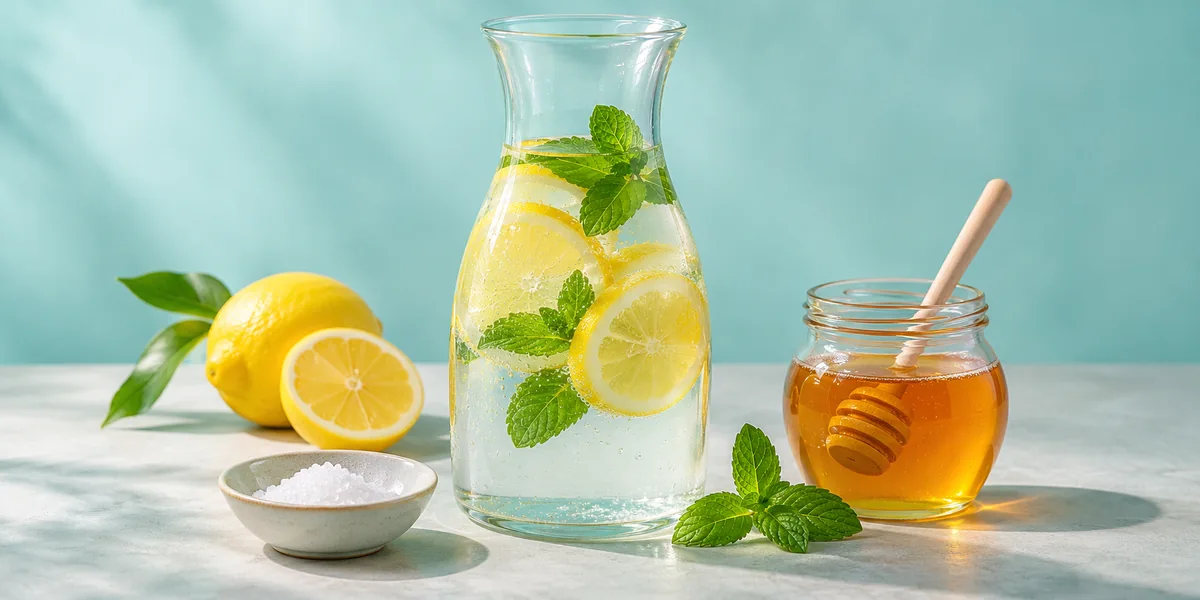
A simple homemade electrolyte drink, and its limits
For a long hot day or a sweaty training session, a home version is easy: 1 litre of water, a quarter of a level teaspoon of salt, the juice of an orange or half a lemon, and if the effort is long, one or two teaspoons of honey or sugar. MedlinePlus counts a teaspoon of salt as about 6 g, so a quarter is about 1.5 g of salt, or roughly 590 mg of sodium per litre (our calculation), within the EU sports drink range.
- It is not an oral rehydration solution: for diarrhoea, vomiting, babies and children, use a pharmacy sachet.
- Kitchen spoons vary, so the amount is approximate.
- Skip the salt with high blood pressure or kidney disease unless your doctor agrees.
- As first aid for heat illness in an alert person, MedlinePlus describes a stronger mix (a teaspoon of salt per litre, half a cup every 15 minutes) while help is on the way. It is for that emergency only.
Best electrolyte drink for the Gulf: how to choose
First decide whether you need one (long sweating, sport over an hour, outdoor work, Ramadan nights after a hot day). Then choose the format and check the sodium, sugar and delivery to your country. On 18 November 2026 we compared three partner products that ship to the Gulf:
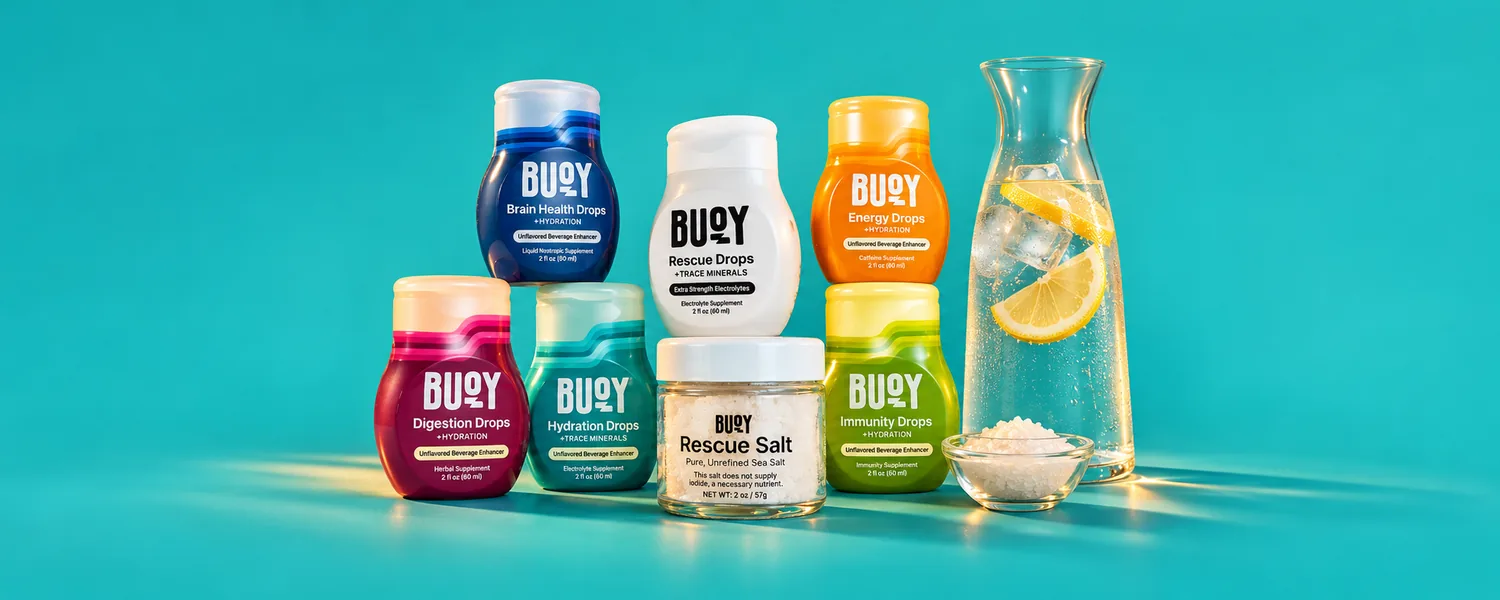
- Buoy (shop): sugar-free liquid drops for any drink, 265 servings per kit, delivered to all six Gulf states with taxes included. AED 298.40 or SAR 304.80 with code BUOY537069 (20% off in the basket). Its weak point: sodium per serving is not published.
- COMBEAU L'Hydratant: one sachet a day with 300 mg potassium, 120 mg calcium and 93.75 mg magnesium according to the brand, no added sugar, about AED 109 for 14 sachets, delivered to the UAE but not Saudi Arabia. The brand advises against it for older people and kidney disease.
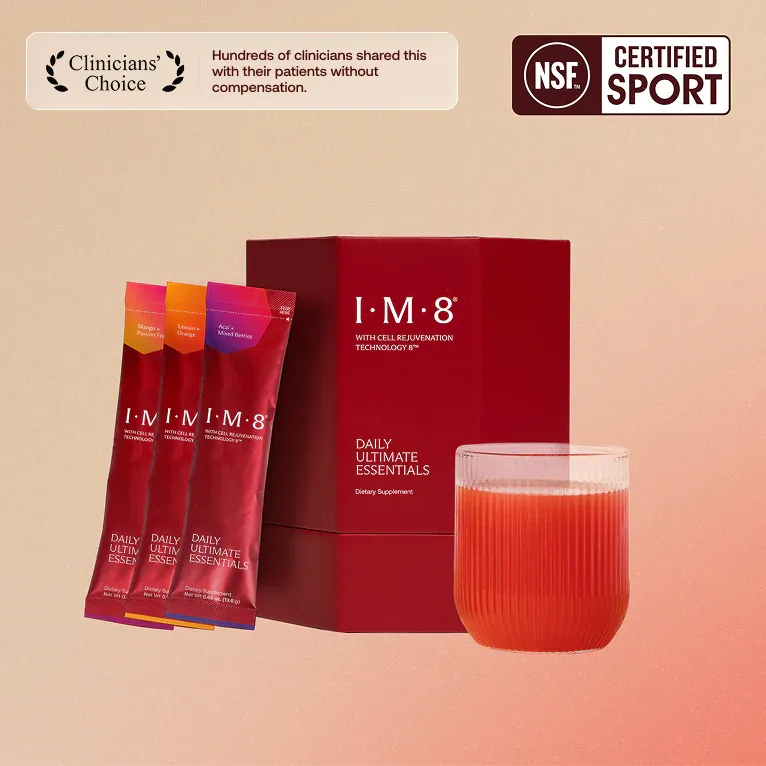
- IM8 (shop): an all-in-one daily powder with a 2,500 mg electrolyte blend among 90 ingredients, not a dedicated electrolyte drink.
Marks, prices and delivery are in our best electrolytes ranking, and all products are in the electrolytes category.
FAQ
What are the benefits of an electrolyte drink?
An electrolyte drink replaces water and some of the sodium lost in heavy sweat, which matters on long, hot days or during prolonged effort. The only EU-authorised claim for sports drinks concerns endurance performance during prolonged endurance exercise, for drinks with set amounts of sodium and carbohydrate. For an ordinary day, water and meals are enough.
Is an electrolyte drink better than water?
Not in general. Water is the foundation, and most people get enough sodium from food: WHO says the average adult already eats more than double the recommended amount. An electrolyte drink makes sense when you sweat heavily for a long time, for example during sport over an hour or outdoor work in summer.
Electrolyte powder or drops: which is better?
Neither is better in itself. A powder sachet gives a fixed dose, sometimes with sugar for long efforts. Drops let you adjust the amount and usually contain no sugar. What matters is the sodium per serving, the sugar, and the price per serving, so choose a product that publishes those figures.
Can I drink electrolytes every day?
A healthy person who sweats a lot can, but there is no clear point on a day spent in air conditioning, and daily extra sodium adds to an already salty diet. People with high blood pressure, kidney or heart disease, or who take blood pressure medicines or diuretics, should ask their doctor first.
Can I take electrolytes during Ramadan?
Yes, between iftar and suhoor only. Spread your water through the night, break the fast with water and dates, and eat vegetables and fruit. A sugar-free electrolyte supplement at suhoor may suit people who work in the heat, but it does not replace water. Anyone with a long-term condition should ask a doctor before fasting.
Are electrolyte drinks safe for children?
Do not give adult sports products to children without a doctor's advice. Remind children to drink water in the heat, since they are more at risk of heat illness. For diarrhoea or vomiting, use an oral rehydration solution from the pharmacy, as WHO recommends, and see a doctor if the child is drowsy, drinks poorly or has sunken eyes.
Sources
- World Health Organization: Diarrhoeal disease
- Telmesani (Umm Al-Qura University, Makkah), oral rehydration salts and the WHO formulas, J Family Community Med 2010
- World Health Organization: Heat and health
- World Health Organization: Sodium reduction
- Baker, sweating rate and sweat sodium in athletes, Sports Med 2017
- Al-Bouwarthan et al., heat stress among construction workers in Saudi Arabia, Ann Work Expo Health 2019
- AlSahow, hot weather, long Ramadan fasts and chronic kidney disease, Int J Nephrol 2023
- Najafi et al., body water compartments after Ramadan fasting, Front Nutr 2023
- MedlinePlus (US National Library of Medicine): Dehydration
- MedlinePlus: Heat emergencies
- MedlinePlus: Potassium in diet
- Commission Regulation (EU) No 432/2012, list of permitted health claims, EUR-Lex
Food supplements are not a substitute for a varied, balanced diet and a healthy lifestyle, and they do not treat or prevent disease. If you are pregnant or breastfeeding, take medication or have a long-term condition, speak to your doctor or pharmacist before use.
Best Supplement Arabia content is written by our editorial team from the information published by the brands. Scores out of 10 rely on a public grid of 5 criteria*, completed by the editorial team’s judgement.
To support Best Supplement Arabia, links on the site are affiliate links: we may earn a commission when you buy through them, at no extra cost to you. Using the site means you accept our terms of use and our editorial policy.