Best Probiotic in the UAE and Gulf 2026: How to Read the Label Before You Buy
Ad: this site contains affiliate links. If you buy through them we may earn a commission, at no extra cost to you. The size of the commission does not decide the ranking.
We compared two products that ship to the UAE or Saudi Arabia, both with a fully named probiotic strain, on strain names, guaranteed CFU count, format, price per day and delivery. Probiotics have no approved health claim, so we promise no result: we help you read the pack.

Best Supplement Arabia is a site dedicated to food supplements: we help you choose reliable brands with detailed reviews and comparisons based on the information the brands themselves publish. We update our rankings regularly to keep up with the market in the UAE and Saudi Arabia. Our method is built on 5 scoring criteria, designed to compare the quality, transparency and real value of each brand.
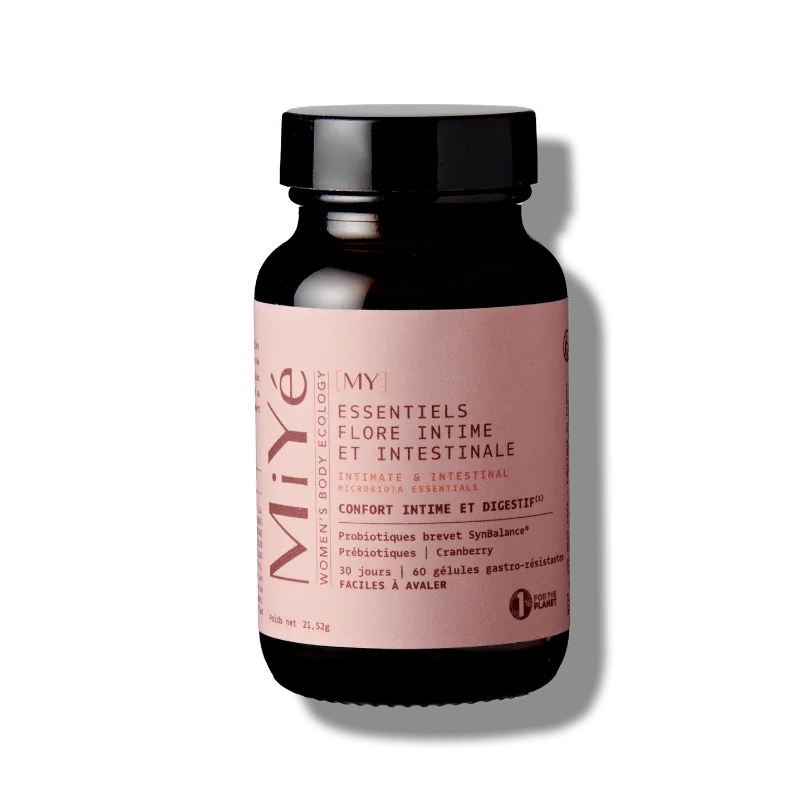


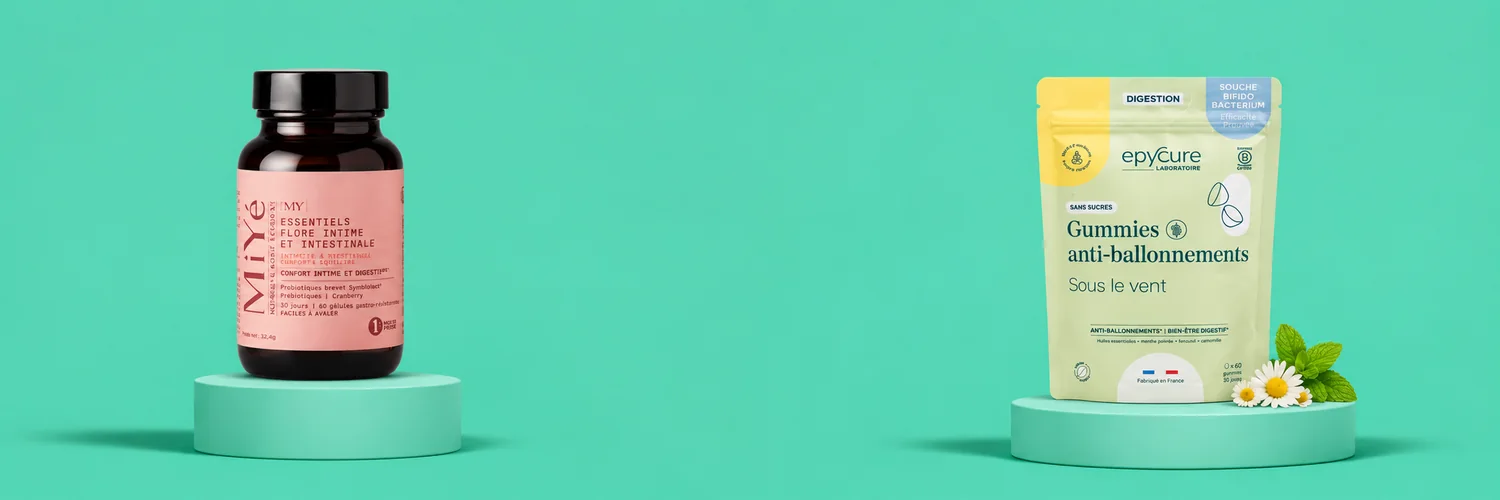
MY Essential Intimate and Intestinal Flora - MiYé


Four fully named strains, local-currency prices and delivery to ten Arab countries
What is in two capsules? According to MiYé, the daily dose combines four strains written out with genus, species and strain code: Lactobacillus rhamnosus LRH020, Bifidobacterium lactis BL050 and Lactobacillus plantarum PBS067 in the SynbÆctive Femme complex, plus Lactobacillus acidophilus PBS066. Alongside them come 324 mg chicory inulin and 180 mg cranberry extract with 36 mg PACs. The brand guarantees 5 billion colony-forming units (CFU) until the end of shelf life, in an acid-resistant plant capsule.
Who is it for? The product is designed for women, by a brand that specialises in female hormonal balance. It can be taken at any time of day, even with food, which is handy during Ramadan at suhoor or iftar.
Price and delivery. A one-month box costs AED 96 in the UAE (down from AED 120) and SAR 98 in Saudi Arabia. Code LMC10 was accepted in the basket on 18 November 2026 for 10% off, bringing it to AED 86.40, about AED 2.88 a day. The code works on one-off purchases, not the subscription refill. International Colissimo shipping is EUR 25.90 (about AED 105), 6 to 12 days, to all six Gulf states plus Morocco, Algeria, Tunisia and Egypt.
Limits. The amount per strain is not stated, and the ingredient list gives CFU per gram. The brand does not state halal certification.
- 4 named strains with genus, species and strain code
- 5 billion CFU guaranteed to the end of shelf life, per the brand
- Prices in AED and SAR, delivery to 10 Arab countries
- Plant capsule you can take at any time
- Code LMC10 works in the basket
- Designed mainly for women
- Amount per strain not broken down
- Shipping takes 6 to 12 days by Colissimo
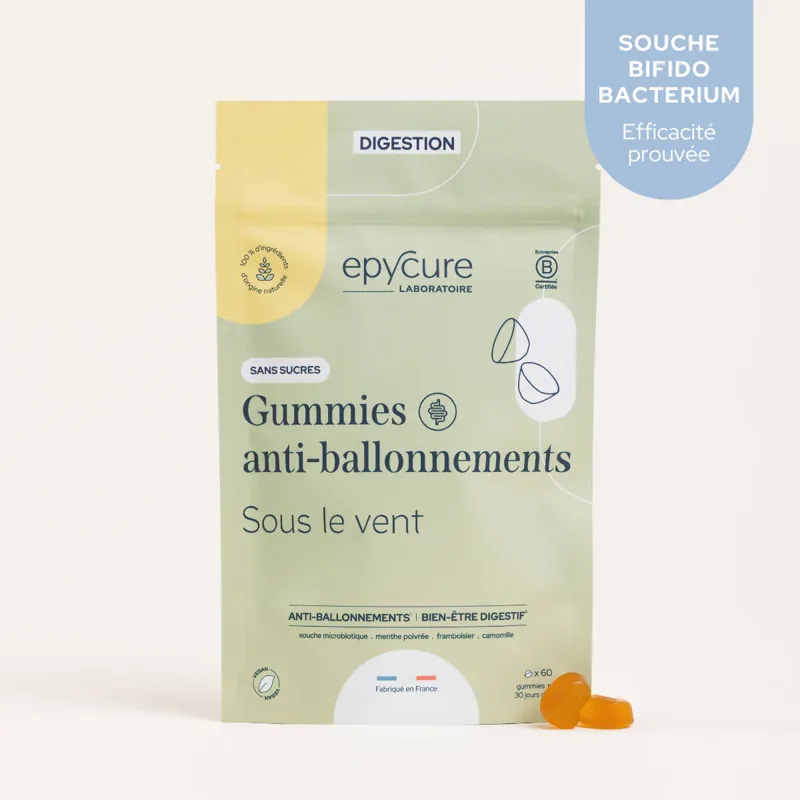

Gummies anti-bloating - Epycure
One studied strain in a gelatine-free plant gummy
Formula. Epycure relies on a single fully named strain, Bifidobacterium breve DSM 16604, with three plants: peppermint, chamomile and raspberry leaf. The gummy is plant-based with no animal gelatine, apple and pear flavoured, sugar-free according to the brand, and made in France. The product name carries a promise from the brand that we do not endorse: no health claim is approved for probiotics.
What is missing? We could not find the number of colony-forming units (CFU) per gummy on the product page, a key figure for comparison. The format suits people who dislike capsules, but gummies are more sensitive to heat and humidity than capsules.
Price and delivery. A 60-gummy box is EUR 20 in the current offer instead of EUR 25, about AED 80.80, and the shop prices in euros. Code LMC was refused in the basket on 18 November 2026, probably because the product is already discounted, so we do not list it. At two gummies a day the box lasts a month, about AED 2.69 a day. International shipping is EUR 19.90 (about AED 80) to all six Gulf states, North Africa and Egypt.
Who is it for? People who prefer a fruity gummy to a capsule and want one clearly named strain. The brand does not state halal certification but confirms there is no animal gelatine.
- Fully named strain: B. breve DSM 16604
- Plant gummy, no animal gelatine, sugar-free per the brand
- Delivery to 10 Arab countries
- Fairly low price per day
- CFU per gummy not stated on the page
- Code LMC refused in the basket during the offer
- Prices in euros, and gummies dislike heat
Analysis of the formula, doses, active ingredients and how transparent the brand is.
Comparison of the real price by dose, quantity and length of use.
Analysis of customer feedback and overall satisfaction.
Discounts when the brand offers a partner deal.
The short answer: which probiotic?
If you want a probiotic with fully named strains, prices in dirhams and delivery anywhere in the Gulf, our top pick is MiYé capsules: four named strains, 5 billion CFU guaranteed to the end of shelf life according to the brand, and delivery to ten Arab countries. If you prefer a fruity plant-based gummy, Epycure gummies offer one fully named strain at a slightly lower price per day, although the CFU count is not published on the product page.
Our list is short on purpose: only two products, because we only include partner brands that really ship to the UAE or Saudi Arabia, whose price we could check in the shop, and whose product names at least one probiotic strain in full. Some products sold in the probiotic aisle contain no strain at all, only plant extracts, enzymes or fibre, so they have no place in this comparison. And because probiotics have no approved health claim, we promise no result here for digestion, immunity or anything else.
Labels and prices compared (official shops, 18 November 2026)
| Product | Strains | CFU | Format | Delivery | Price |
|---|---|---|---|---|---|
| MiYé | 4 named strains | 5 billion (2 capsules) | Plant capsule | Gulf, North Africa, Egypt | AED 86.40 with LMC10 |
| Epycure | B. breve DSM 16604 | Not stated | Plant gummy | Gulf, North Africa, Egypt | About AED 80.80 |
The price marked "about" is converted from euros at AED 4.04, because the Epycure shop does not show dirhams; you pay in the shop's currency.
What is a probiotic?
Probiotics are live microorganisms, usually bacteria from the Lactobacillus and Bifidobacterium families, sold as capsules, powders or gummies, and found naturally in some fermented foods such as laban and yoghurt. Every product differs in the strains it contains and how many, so it makes little sense to talk about "probiotics" as if they were one substance.
From a regulatory point of view, no probiotic strain has an approved health claim in the EU to date; even the word "probiotic" is treated there as a claim. In the UAE, the Ministry of Health and Prevention (MOHAP) registers supplements and oversees what goes on the label, as does the Saudi Food and Drug Authority (SFDA) in Saudi Arabia. So we compare what can be read on the pack: strain names, numbers, format, price and delivery.
"Best probiotic" is a very common search in the Gulf, and the answers often come with sweeping promises. We would rather give you the tools to read a label yourself, which also work for any product you find at the pharmacy.
The strain: the full name matters more than the slogan
A probiotic's full name has three parts: genus (such as Lactobacillus), species (such as rhamnosus) and strain code (such as LRH020). The third part matters most, because studies are done on a specific strain, and what is seen with one strain does not automatically carry over to another strain of the same species. A product that only says "Lactobacillus" or "a blend of friendly bacteria" does not give you enough to compare.
On our list, MiYé writes out four full strains and Epycure one full strain (Bifidobacterium breve DSM 16604). That is the minimum we ask for before including any probiotic, and a product that names no strain does not enter the comparison at all. The number of strains is not a criterion in itself: four strains do not make a product better than one with a single strain; what matters is knowing exactly what you are buying.
CFU count: at manufacture or to the end of shelf life?
CFU means colony-forming unit, a way of counting live bacteria, usually given in billions. But the key question is not "how many billion?" but "when were they counted?". Some brands state the count at manufacture, and bacteria die off over time and with heat, so far fewer reach you. A serious brand writes "guaranteed until the end of shelf life", as MiYé does with 5 billion CFU for two capsules.
A bigger number does not necessarily mean a better product: what matters is that the amount is stated per strain or in total, and guaranteed until the expiry date. A missing figure, as with Epycure gummies on the product page, is a weak point when comparing.
Prebiotics and other added ingredients
Prebiotics are fibres the body does not digest that reach the gut, the best known being inulin from chicory. MiYé adds 324 mg to its capsules, with cranberry extract. These additions are not bad, but they do not automatically make a product better, and inulin can cause bloating or wind in some people during the first days. The plants in Epycure gummies (peppermint, chamomile and raspberry leaf) are used traditionally in drinks, but the amounts are not given.
Probiotics for women: what is in the MiYé formula?
Many readers look specifically for probiotics for women, and our top pick is designed for them, according to the brand. Its full name, MY Essential Intimate and Intestinal Flora, says who it is for, and each two-capsule serving combines four fully named strains (L. rhamnosus LRH020, B. lactis BL050, L. plantarum PBS067 and L. acidophilus PBS066) with the inulin and cranberry extract mentioned above. That is a description of the formula, not a promise: no strain has an approved health claim, and we do not say the product treats or prevents any problem.
In practice, a woman choosing a probiotic should check the same things as anyone else: named strains, a CFU count guaranteed to the end of shelf life and a capsule that copes with Gulf heat. MiYé says its product is suitable during pregnancy and breastfeeding, but your doctor should have the final word. And if intimate or digestive symptoms persist, a diagnosis comes before any supplement.
Gulf heat and storage: the point everyone forgets
Live bacteria are sensitive to heat and humidity. A parcel left for hours in a van or on a doorstep in Dubai or Riyadh in summer can be exposed to more than 45 degrees. So we suggest:
- Order in the cooler months if you can, or choose the fastest shipping available.
- Collect the parcel yourself and do not leave it in the sun.
- Store the pack somewhere cool and dry, and in the fridge if the brand asks or humidity is high (MiYé recommends the fridge in humid conditions).
- Acid-resistant capsules in a sealed pack cope with shipping better than gummies.
Food first: laban, yoghurt and fermented foods
Before any capsule, Gulf and Arab tables already include familiar fermented foods: laban, yoghurt and labneh, and kefir in some homes. These contain live bacteria if they are not pasteurised after fermentation, and bring protein and calcium too. Shop-bought pickles, on the other hand, are usually made with vinegar and pasteurised, so they contain almost no live bacteria, and they are salty. A supplement does not replace these foods; it may sit alongside them for someone who wants a specific strain in a known amount. And plenty of vegetables, pulses and whole grains provide the fibre gut bacteria feed on.
Reading the label step by step
- Does the product contain a probiotic strain at all? Some products shelved next to probiotics contain only plants, enzymes or fibre.
- Are the strain names complete? Genus, species and strain code, such as Bifidobacterium breve DSM 16604.
- Is the CFU count stated? And is it guaranteed to the end of shelf life, or only at manufacture?
- What kind of capsule? Plant or gelatine, acid-resistant or not.
- What else is in it? Inulin, plants, sweeteners, and how much of each.
- Storage conditions? Room temperature or fridge, and whether it can survive shipping to the Gulf.
- Who made it, and where? Company name and address, batch number and expiry date.
If the answer to the first question is no, the product is not a probiotic, whatever its name. And if you cannot answer at least four of the six other questions from the pack, the product does not give you enough to compare, however big its promises.
Common mistakes when buying a probiotic
- Picking the biggest billion figure: a number without named strains or a shelf-life guarantee means little.
- Confusing probiotics with what is sold next to them: fibre, enzymes and plant extracts are not probiotics. Read the ingredient list before assuming a product contains live bacteria.
- Ignoring shipping and heat: an excellent product that spends two weeks in summer heat may lose part of its bacteria.
- Switching product every week: if you decide to try one, give it a few weeks of regular use, then judge for yourself.
- Putting off the doctor: persistent digestive symptoms need a diagnosis, and a supplement is no substitute.
- Trusting "100% natural": every product here is natural in origin, which says nothing about quality or dose.
How long to try, and what to watch
We cannot promise a result, but we can suggest an organised way to try a product if you decide to. Pick just one product and take the stated dose every day for about four weeks, usually one box. Note what you notice each week in a small notebook: comfort after meals, regularity, any discomfort. Do not overhaul your whole diet at the same time, or you will not know what made the difference. Some people notice mild wind or bloating in the first days, especially with inulin, which usually settles. If you get severe pain, fever or a rash, stop at once and call a doctor.
After the first box, decide calmly: if you noticed no difference, there is no reason to keep paying. A probiotic is not something you must take for life, and the decision is yours and your doctor's.
How we ranked them
We only included partner brands that ship to the UAE or Saudi Arabia and whose product names at least one probiotic strain in full. We checked prices on 18 November 2026, selecting the UAE and then Saudi Arabia, and tested codes in an empty basket without buying. Scores are split across five criteria:
- Formula and verifiable dose (35%): full strain names, CFU count, label clarity.
- Quality and traceability (20%): guarantee to end of shelf life, place of manufacture, capsule type.
- Price per day (20%): pack price divided by days of use.
- Customer reviews (15%): independent ratings where available.
- Service and delivery (10%): countries served, shipping cost, currency and returns.
MiYé comes first because it combines named strains, a guaranteed count, local-currency prices and wide delivery. Epycure is second: its strain is named and its price per day is slightly lower, but its CFU count is not published, which costs it points on formula, and its shop shows euros only and did not accept the code during the current offer.
Delivery and taxes
- MiYé: all six Gulf states plus Morocco, Algeria, Tunisia and Egypt, EUR 25.90 (about AED 105), 6 to 12 days.
- Epycure: the same ten countries, EUR 19.90 (about AED 80), Morocco EUR 13.90.
With shipping, one box of MiYé comes to about AED 191 and one box of Epycure to about AED 161, before any VAT or customs duties. VAT is 5% in the UAE and 15% in Saudi Arabia, and customs duties may be added on delivery if the shop has not included them.
Shipping here can equal or exceed the price of the pack, so ordering more than one at once can work out cheaper, as long as you respect the expiry date and storage advice. Epycure, for example, sells a three-month box at EUR 56.25 in the current offer (about AED 227).
Price per day
MiYé costs about AED 2.88 a day with the code at two capsules, and Epycure gummies about AED 2.69 a day at two gummies. The gap between the two is less than AED 0.20 a day; shipping is what really changes the bill.
The Epycure price here is an offer price (EUR 20 instead of EUR 25) and may go up when the offer ends, so the price shown in the basket is the one that counts.
Safety: when to ask a doctor
- Weakened immunity, serious illness or an intravenous line: do not take any probiotic without your doctor's agreement.
- Pregnancy and breastfeeding: MiYé says its product is suitable, while Epycure lists pregnancy and breastfeeding among its precautions; in both cases, ask your doctor.
- Children and teenagers: MiYé is not recommended under 10, and Epycure says its gummies are for adults over 18.
- Allergies: Epycure gummies contain chamomile, from the daisy (Asteraceae) family, and peppermint, so take care if you are allergic to either.
- Stomach and liver: Epycure lists reflux, ulcers, gastritis and gallbladder or liver disorders among its precautions, and recommends asking a doctor if you take any medication, because of the chamomile. Its gummies are also sweetened with maltitol, which can have a laxative effect in large amounts.
- Persistent symptoms: abdominal pain, blood, weight loss or lasting diarrhoea are reasons to see a doctor, not to buy a supplement.
If you are taking an antibiotic, ask your pharmacist about spacing it from the probiotic.
Probiotics during Ramadan
During Ramadan the only window is between iftar and suhoor. MiYé capsules can be taken at any time, even with food, so suhoor works well. Epycure gummies are taken after a meal according to the brand, one after each of two meals, which fits iftar and suhoor neatly. Regularity matters more than the exact hour, and it is best not to take every supplement at once on an empty stomach at iftar.
If you order before Ramadan, allow for shipping time (6 to 12 days for MiYé) so the pack arrives before the month begins.
Are these products halal?
Neither brand states halal certification on its product page as of 18 November 2026. MiYé uses a plant capsule, and Epycure says in its FAQ that it uses apple pectin rather than bovine or porcine gelatine, which is not the same as halal certification. If certification is a requirement for you, ask customer service before buying.
How to choose
- Probiotics for women, with named strains, a guaranteed count and delivery anywhere in the Gulf: MiYé.
- You dislike capsules and prefer a plant gummy: Epycure.
- A man looking for a probiotic with a named strain: Epycure, since the MiYé product is designed mainly for women.
And remember that a varied diet with vegetables, pulses and fermented foods such as laban and yoghurt, plus enough water, is the foundation. You may also like our guide to the best electrolytes for hot days.
Transparency and updates
Best Supplement Arabia does not sell any product. If you buy through our links we may earn a commission at no extra cost to you. No brand paid for its ranking or for positive wording, and weak points are listed on every card. We review prices and codes every three months, and whenever a formula, price or delivery country changes.
Food supplements are not a substitute for a varied, balanced diet and a healthy lifestyle. If you are pregnant or breastfeeding, take medication or have a long-term condition, speak to your doctor or pharmacist before use.
Sources
Frequently asked questions❓
The most common questions about probiotics:
In our scoring MiYé capsules come first (9.0): four fully named strains, 5 billion CFU guaranteed to the end of shelf life according to the brand, prices in dirhams and delivery to all six Gulf states. The product is designed for women. For a plant gummy, Epycure is second with one named strain, although its CFU count is not published.
No probiotic strain has an approved health claim to date, neither in Europe nor under the standards used by Gulf authorities, so we promise no result. Findings vary by strain, dose and person. If you have ongoing digestive symptoms, a doctor is the first step, not a supplement.
Follow the brand's instructions: MiYé capsules can be taken any time, even with food, and Epycure gummies after a meal, one after each of two meals. Taking it every day matters more than the exact time. During Ramadan, suhoor suits the capsules, and iftar and suhoor both suit the gummies.
Neither brand on our list states halal certification as of 18 November 2026. MiYé uses a plant capsule, and Epycure says it uses apple pectin rather than bovine or porcine gelatine. In general, watch for capsules and gummies made with gelatine, and ask the brand for certification if you need it.
It depends on the product, so read the pack. Some cope with room temperature, but Gulf summer heat goes beyond what live bacteria tolerate. Keep the pack cool, dry and out of the sun, and in the fridge if humidity is high, as MiYé advises.
Anyone with weakened immunity, a serious illness or an intravenous line, unless a doctor agrees. Pregnant or breastfeeding women and children also need medical advice. With antibiotics, ask your pharmacist how to space the medicine and the probiotic.
Because we only list partner brands that really ship to the UAE or Saudi Arabia, whose price we checked in the basket, and whose product names at least one probiotic strain in full. Products with no strain at all do not belong in a probiotic comparison. We review the list every three months.
No format is best for everyone. An acid-resistant capsule in a sealed pack copes better with shipping and heat, while a gummy is easier if you dislike swallowing, but needs more care in storage in a Gulf summer. In both cases, what matters most is the strain name and CFU count written on the pack.
Our 5 scoring criteria and our commitments
Best Supplement Arabia scores out of 10 are based on a public grid of 5 criteria, completed by the editorial team’s judgement. Our content is written by the editorial team from the information published by the brands.
Verifiable formula and doses (35%)


Proven quality and traceability (20%)
Price per serving (20%)

Customer reviews (15%)