What is lion's mane?
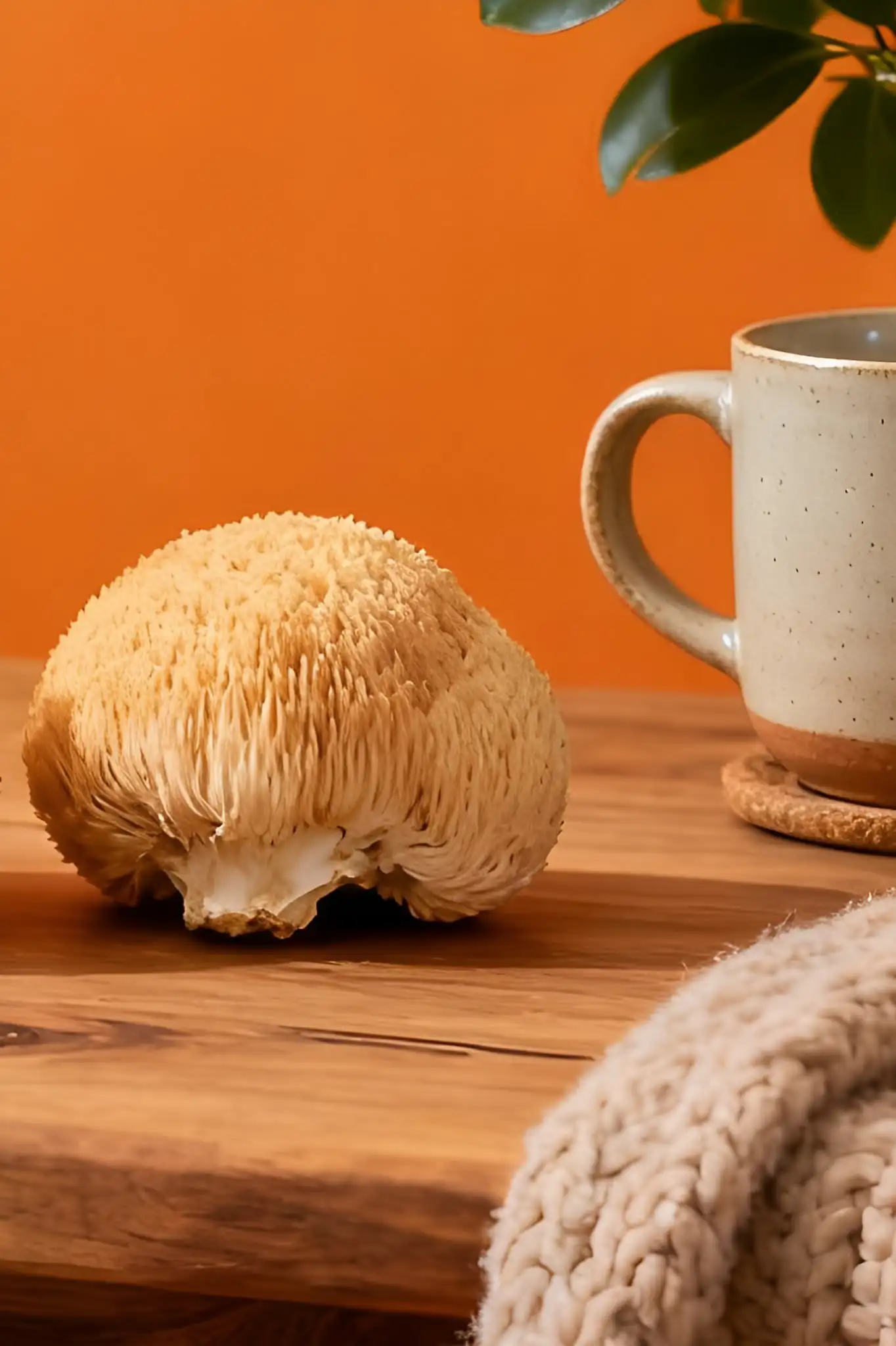
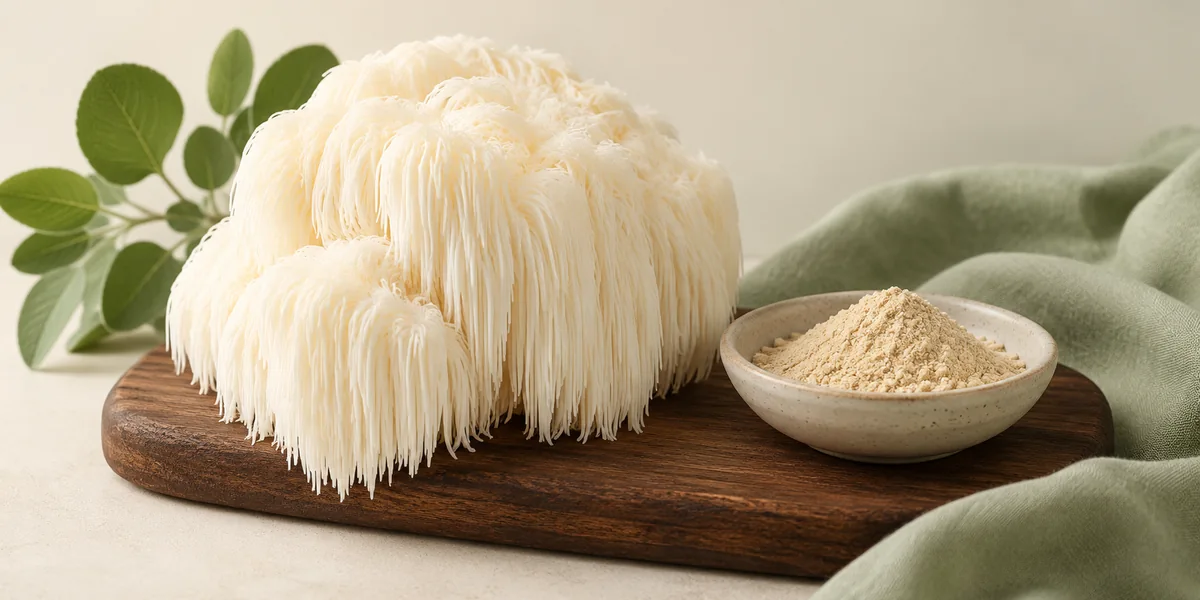
Lion's mane (Hericium erinaceus) is a white mushroom that grows on hardwood trees, with long, soft, hanging spines that look like a lion's mane, hence the name. In Japan it is called yamabushitake.
It is first of all a food. It is cooked fresh in Asian cuisine and has a long traditional use in China and Japan. One recent study notes that a single dish can contain up to 300 g of fresh mushroom when it is cooked as thick slices. In supplements, it comes dried and ground, or as a concentrated extract, and that is where products start to differ a lot.
Searches for this mushroom are rising in the UAE and Saudi Arabia, in English and in Arabic, and so are the promises on shop pages. This guide explains what is in the jar and what research actually measured, without promising a result. If you want the product comparison straight away, see our best mushroom supplements ranking.
Fruiting body or mycelium: which part is in the jar?
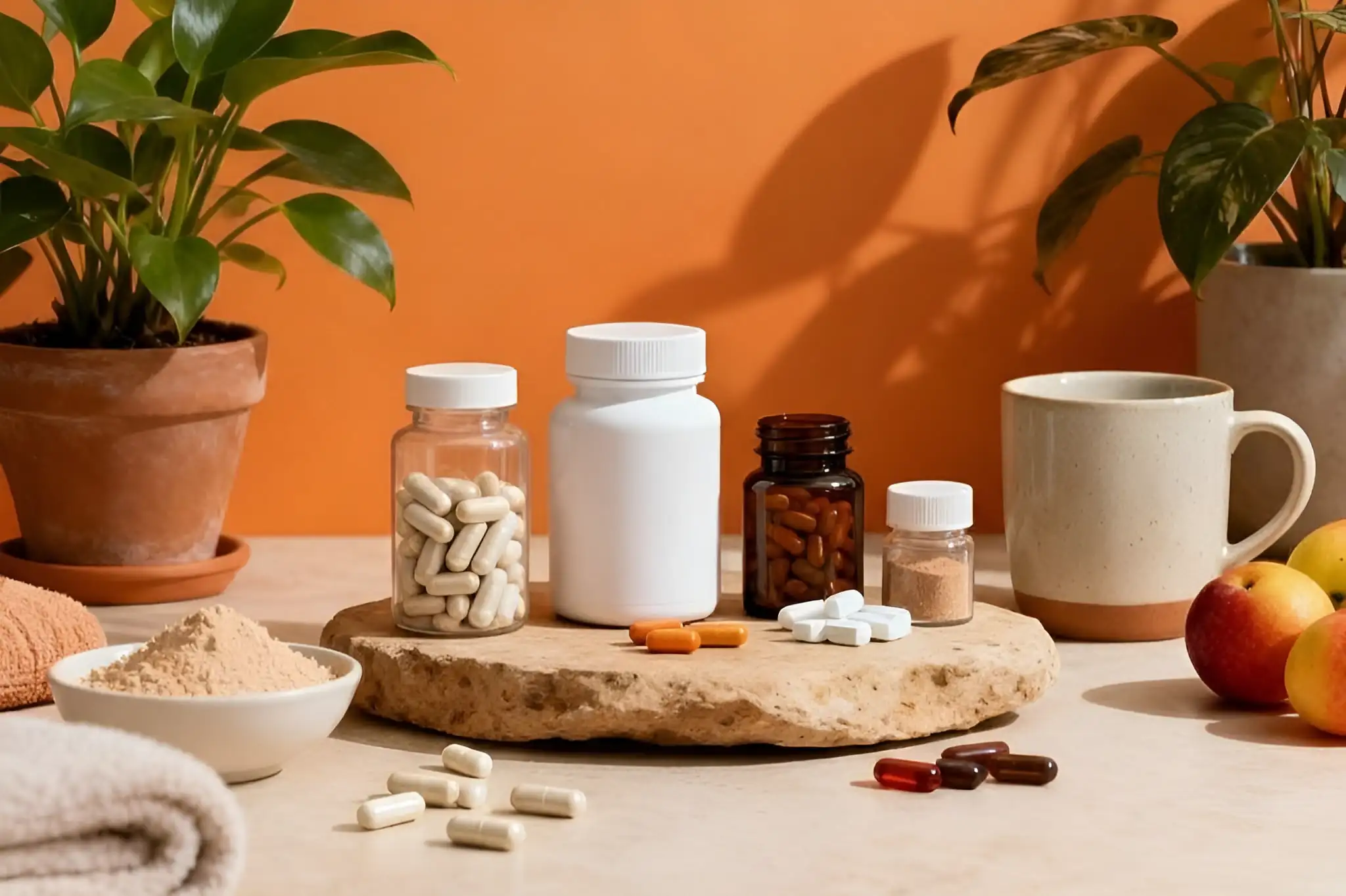
Two parts of the mushroom end up in supplements:
- The fruiting body: the visible part we see and eat. Most of the human trials in this guide used it.
- The mycelium: the network of fine threads the mushroom grows from. It is often grown on grain such as rice or oats, and some of that grain can stay in the final powder, which lowers the real share of mushroom.
One is not simply good and the other bad, but they are not the same material. Researchers are interested in two groups of compounds: hericenones, described mainly in the fruiting body, and erinacines, linked mainly to the mycelium. The mushroom also contains polysaccharides, the best known being beta-glucans. In practice, a serious product states on the label which part it uses, instead of just saying "mushroom".
Extract, ratio and "dried mushroom equivalent"
A ratio such as 10:1 means ten grams of dried mushroom gave one gram of extract. So "1,000 mg dried mushroom equivalent" at 10:1 really means 100 mg of extract. That is not cheating, but it makes labels hard to compare: always compare extract weight with extract weight, and powder with powder. A beta-glucan percentage, when it comes with a test method, is an extra sign of quality control.
Capsules, powders and mushroom coffee: the main forms
Format does not decide quality on its own, but it changes the dose, the caffeine and the price per day.
Common forms and what to watch
| Form | What it is | Upside | Watch out for |
|---|---|---|---|
| Capsules | Powder or extract in a fixed amount | Clear dose, no taste, usually no caffeine | Often blended with other ingredients such as ginkgo or bacopa |
| Pure powder | Ground dried mushroom or extract | Flexible, mixes into drinks | Spoon measuring is approximate, earthy taste |
| Mushroom coffee | Instant powder on a coffee, chicory or roasted barley base | Replaces the morning cup | Caffeine varies widely, and the mushroom amount can be small |
| Fresh or dried mushroom | The food itself | An ordinary food | Availability varies, and the amount eaten is not standardised |
Mushroom coffee: what is actually in the cup?
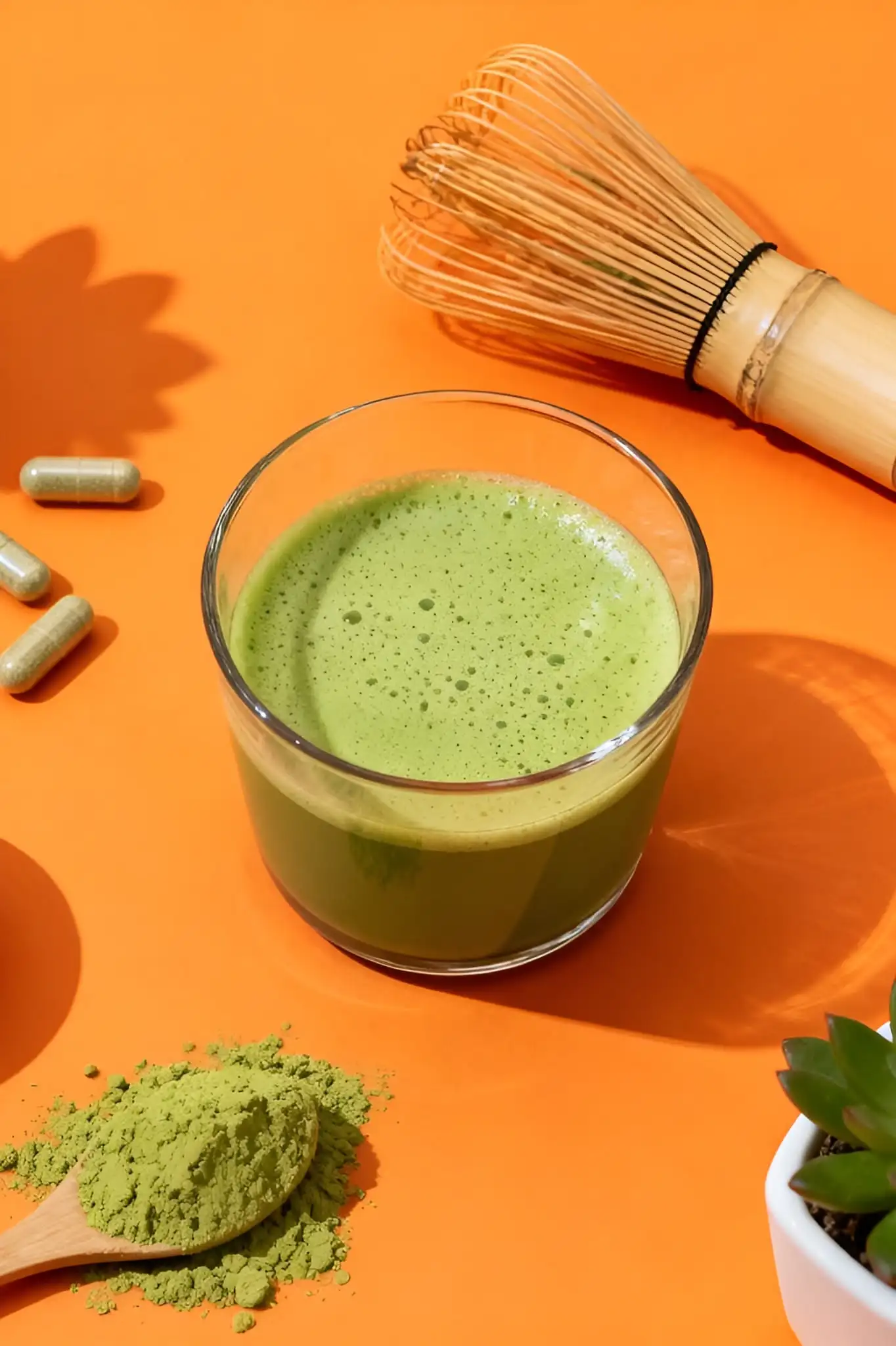
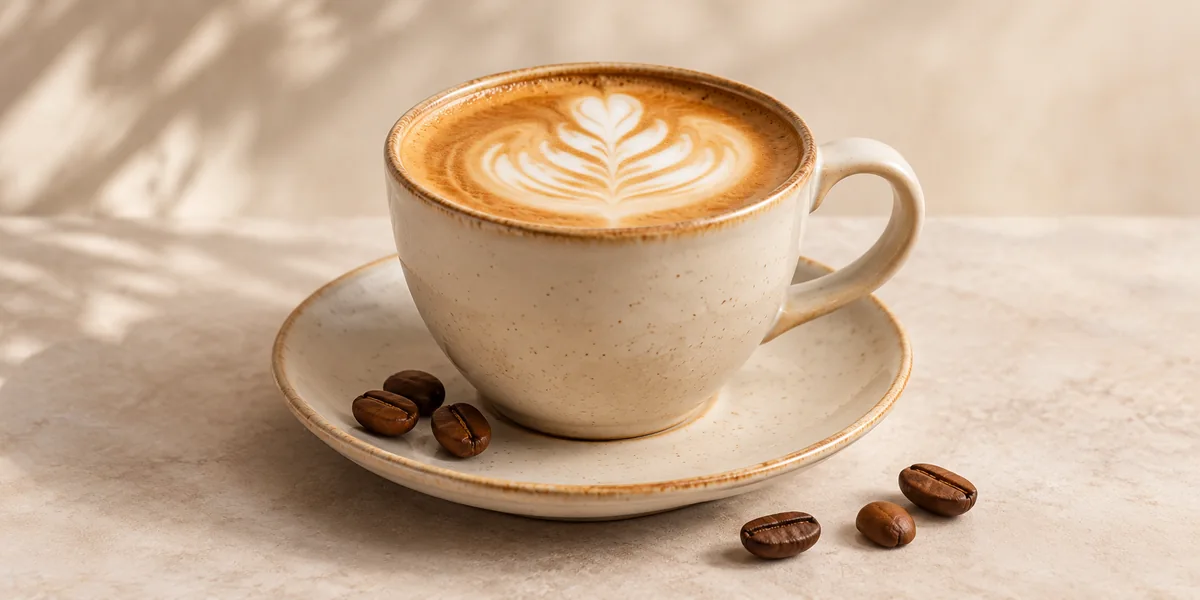
Mushroom coffee is an instant powder that mixes mushroom extracts with a coffee base, or with a coffee substitute such as roasted chicory or barley. The word "coffee" says nothing about caffeine, so read the label. Among the products we compared on 18 and 21 November 2026:
- Spacegoods Rainbow Dust: 80 to 120 mg of caffeine per serving depending on flavour, about a normal cup of coffee.
- Bonjour Drink Super Mix: about 35 mg in the Original and Coffee flavours, and caffeine-free flavours exist.
- Mush N Go Brainstoorm Coffee: 20 mg of caffeine per serving according to the brand, on a roasted chicory base.
- Wake Le Super Café: 4.7 mg on the label, a figure that looks low for the amount of arabica it contains.
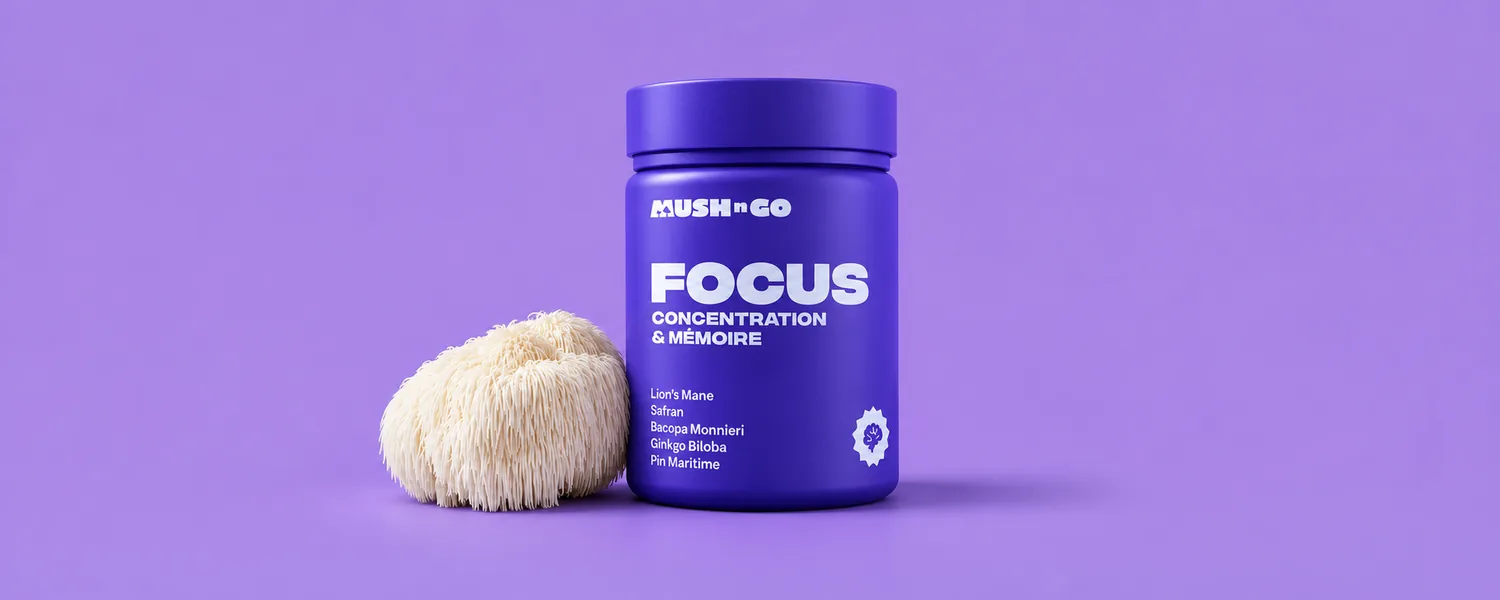
If you already drink Arabic coffee, tea or karak during the day, add it all up. The European Food Safety Authority considers up to 400 mg of caffeine a day safe for healthy adults, and up to 200 mg a day in pregnancy. The simplest approach is to drink mushroom coffee instead of a cup, not on top of it. A capsule with no caffeine, such as Focus, avoids the question altogether.
Lion's mane benefits: what human studies measured
Search for lion's mane benefits and you will find long lists of promises about memory, focus and nerves. The research behind them is much thinner. Most of it was done in the lab or on animals. A 2025 systematic review found only five randomised trials and three pilot trials in people, alongside fifteen laboratory studies. The human trials below are the main ones, all small.
Main human trials on Hericium erinaceus (sources at the bottom of the page)
| Study | Participants and length | What was measured | Published result |
|---|---|---|---|
| Mori et al., 2009 | 30 Japanese adults aged 50 to 80 with mild cognitive impairment, 16 weeks, four 250 mg tablets of dried powder three times a day | A cognitive function scale | Scores rose compared with placebo, then fell again 4 weeks after stopping; no adverse effect in lab tests |
| Saitsu et al., 2019 | 31 adults over 50, 12 weeks, 3.2 g a day of powdered fruiting body | Three cognitive tests | A difference on one test out of three, none on the other two |
| Nagano et al., 2010 | 30 women, 4 weeks, cookies containing the mushroom | Questionnaires on mood, sleep and menopause complaints | Some scores fell compared with the start; differences with placebo on only two items |
| Docherty et al., 2023 | 41 healthy adults aged 18 to 45, 28 days, 1.8 g a day | Cognitive tests, mood and stress | Faster on one task after a single dose, a non-significant trend on stress, with null and some negative findings |
| Surendran et al., 2025 | 18 healthy adults aged 18 to 35, a single 3 g dose of 10:1 fruiting body extract | Cognition and mood 90 minutes later | No difference on overall measures, better on one dexterity test |
The limits are worth spelling out. Each trial enrolled between 18 and 41 people, the longest lasted 16 weeks, and they used very different preparations (tablets, cookies, capsules, extract). Most results concern one test out of several, some are comparisons with the start of the study rather than with placebo, and in the 2009 trial the difference faded once people stopped. The authors themselves call for larger trials. Animal and laboratory work cannot be transferred to people.
What a label may say. A food supplement is not a medicine. There is no authorised health claim for this mushroom in the EU register, and in Saudi Arabia and the UAE, as in Europe, a supplement may not claim to treat, cure or prevent a disease. A jar that promises sharper memory, better focus or nerve repair goes further than the evidence and the rules allow. We describe the mushroom by its composition, and that is how we judge products.
Lion's mane dosage: what studies and labels use
There is no official daily reference amount for this mushroom. The only guides are the trials and each brand's directions:
- In studies: about 3 g a day of dried powder tablets (2009), 3.2 g a day of powdered fruiting body (2019), 1.8 g a day (2023), and a single 3 g dose of a 10:1 extract (2025).
- On the labels we compared in November 2026: Focus gives 2,000 mg as dried mushroom equivalent for two capsules, Rainbow Dust and Brainstoorm Coffee 1,000 mg per serving, Super Mix 750 mg per cup, and Wake 156 mg in its autumn recipe.
These figures are not counted the same way (powder, extract or dried equivalent), so they cannot be compared head to head. The practical rule: follow your label, start with the lowest amount, and do not take two products containing it at the same time.

Lion's mane side effects and who should avoid it
The short trials did not report serious problems, but they were not designed to detect rare effects. Reported side effects include stomach discomfort, nausea and skin rash, and a 2025 review also lists headache and allergic reactions. In 2003, doctors in Japan described a 63-year-old man with severe acute respiratory failure linked to a Hericium extract; he recovered after treatment. It is one case, but it shows a reaction is possible.
- Mushroom allergy: avoid it altogether.
- Pregnancy and breastfeeding: there is no safety data, so do not take it without your doctor's agreement.
- Children and teenagers: there is no data in these groups, so do not give it without medical advice.
- Blood thinners: interactions are poorly studied, so ask your doctor first. Note that Focus also contains ginkgo, which calls for caution with these medicines.
- Diabetes medicines and other long-term treatments: ask your doctor or pharmacist before starting, and tell them about every supplement you take.
- Before surgery: tell your surgeon about any supplement in the weeks before.
- The other ingredients: caffeine in drinks, ashwagandha in Rainbow Dust and Brainstoorm Coffee (not for pregnancy or breastfeeding), ginseng in Super Mix, fish collagen in Wake.
If unusual symptoms appear after starting (breathing difficulty, rash, digestive upset), stop and speak to a doctor or pharmacist. Breathing difficulty needs urgent care.
How to choose a good supplement in the UAE and Saudi Arabia
- The part used: fruiting body, mycelium or both, stated on the label.
- A clear amount: extract weight in mg, or dried mushroom equivalent with the ratio. A vague "proprietary blend" tells you nothing.
- Analyses: a beta-glucan figure or a published certificate of analysis is a plus.
- The rest of the formula: caffeine, ashwagandha, ginkgo or ginseng can matter more for your safety than the mushroom itself.
- Sensible claims: a serious product describes its mushroom, it does not promise a better brain.
- Delivery to your country: several good brands ship to the UAE but not to Saudi Arabia. Check before you fall for a product.
- Price per day, shipping included: a small order can double in price with Gulf shipping.
Products we compared that ship to the Gulf
In November 2026 we checked the labels, prices and delivery of these products. In short:
- Mush N Go Focus: caffeine-free capsules with 2,000 mg dried mushroom equivalent for two capsules, with bacopa, ginkgo and saffron. Ships to all six Gulf states. AED 123.20 a box on the monthly subscription, instead of AED 176. Our Mush N Go review covers the whole range.
- Mush N Go Brainstoorm Coffee: a coffee-flavoured drink on a chicory base, 1,000 mg each of lion's mane, cordyceps and chaga per serving from the fruiting body according to the brand, 20 mg of caffeine. It contains no reishi. AED 123.20 a pouch on the subscription.
- Spacegoods Rainbow Dust: 1,000 mg each of lion's mane, cordyceps and chaga, but 80 to 120 mg of caffeine. Ships to the UAE, Saudi Arabia and Oman. AED 114.40 with the code on the monthly subscription. See our Spacegoods review.
- Bonjour Drink Super Mix: an organic coffee alternative with 750 mg each of three mushrooms and about 35 mg of caffeine, delivered to the UAE and Saudi Arabia.
- Wake Le Super Café: tastes like coffee, with collagen, but only 156 mg of the mushroom, and ships to the UAE only.
Marks, codes and price per day are in our best mushroom supplements ranking, and all products are grouped under functional mushrooms. None of these products contains reishi in its current recipe: if that is the mushroom you want, read our reishi guide. VAT (5% in the UAE, 15% in Saudi Arabia) and customs duties may be added on delivery.
FAQ
Is lion's mane safe?
As a food, it has been eaten for a long time in Asian cooking. In the short human trials, of up to 16 weeks, no serious side effects were reported, but long-term safety as a supplement has not been studied. Reported effects include stomach discomfort, nausea, headache and skin rash, and allergic reactions are possible. Avoid it if you are allergic to mushrooms, and ask your doctor first if you are pregnant, breastfeeding or take regular medication.
What are the proven benefits of lion's mane?
None is proven to a strong standard. A handful of small trials, with 18 to 41 participants, found differences on some cognitive test scores or questionnaires, often on one test out of several, and one of them saw the effect fade after people stopped. No health claim is authorised for this mushroom, so a supplement cannot promise you better memory, focus or nerves.
How much lion's mane should I take a day?
There is no official reference dose. Trials used about 1.8 to 3.2 g a day of dried mushroom powder or preparation, and one single-dose study used 3 g of a 10:1 extract. Supplements sold in the Gulf range from 156 mg to 2,000 mg per serving depending on how they count it. Follow your product's label, start low and do not combine several products containing it.
Is mushroom coffee a good swap for regular coffee?
It depends on what you want. Some mushroom coffees contain as much caffeine as a normal cup (80 to 120 mg for Rainbow Dust), others very little (around 20 mg for Brainstoorm Coffee, according to Mush N Go). In Ramadan, it fits between iftar and suhoor like any drink, but put water first and avoid the high-caffeine ones close to bedtime.
Can I take lion's mane with medication?
Interactions between this mushroom and medicines are poorly studied, and some sources note it may interact with certain medications. If you take blood thinners, diabetes medicines or any long-term treatment, ask your doctor or pharmacist before starting, and check the other ingredients: ginkgo in some capsules and ashwagandha in some drinks have their own precautions.
Is lion's mane the same as reishi?
No. Hericium erinaceus is a white, shaggy, edible mushroom, while reishi (Ganoderma lucidum) is a hard, glossy, bitter mushroom used mainly as an extract. They contain different compounds and appear in different products. See our reishi guide for the details.
Sources
- Mori et al., Yamabushitake and mild cognitive impairment, Phytother Res 2009
- Saitsu et al., oral intake of Hericium erinaceus and cognitive tests, Biomed Res 2019
- Nagano et al., 4 weeks of Hericium erinaceus intake in women, Biomed Res 2010
- Docherty et al., lion's mane in young adults, pilot study, Nutrients 2023
- Surendran et al., acute effects of a lion's mane extract, Front Nutr 2025
- Menon et al., Hericium erinaceus as a supplement, systematic review, Front Nutr 2025
- Nakatsugawa et al., case of acute respiratory distress linked to a Hericium extract, Intern Med 2003
- Memorial Sloan Kettering Cancer Center: Lion's Mane Mushroom
- EFSA: Scientific Opinion on the safety of caffeine (2015)
- EU Register of nutrition and health claims
- Saudi Food and Drug Authority (SFDA)
Food supplements are not a substitute for a varied, balanced diet and a healthy lifestyle, and they do not treat or prevent disease.
Best Supplement Arabia content is written by our editorial team from the information published by the brands. Scores out of 10 rely on a public grid of 5 criteria*, completed by the editorial team’s judgement.
To support Best Supplement Arabia, links on the site are affiliate links: we may earn a commission when you buy through them, at no extra cost to you. Using the site means you accept our terms of use and our editorial policy.