What is reishi mushroom?
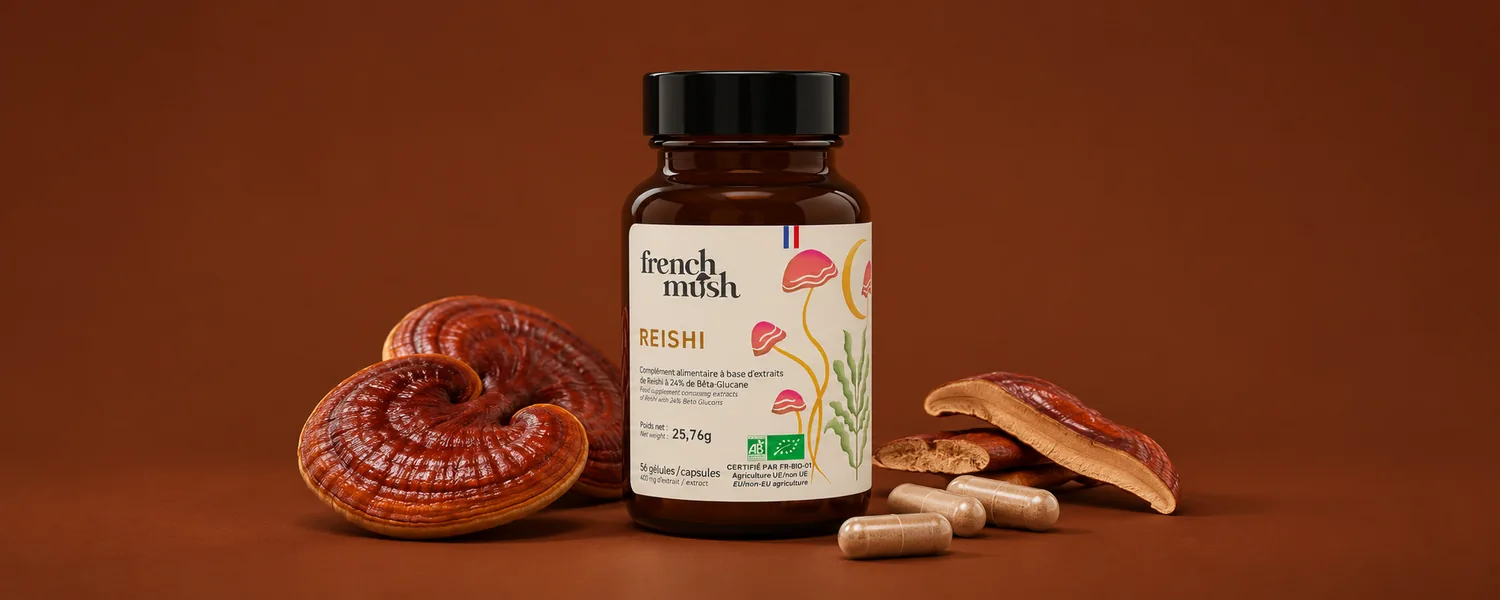
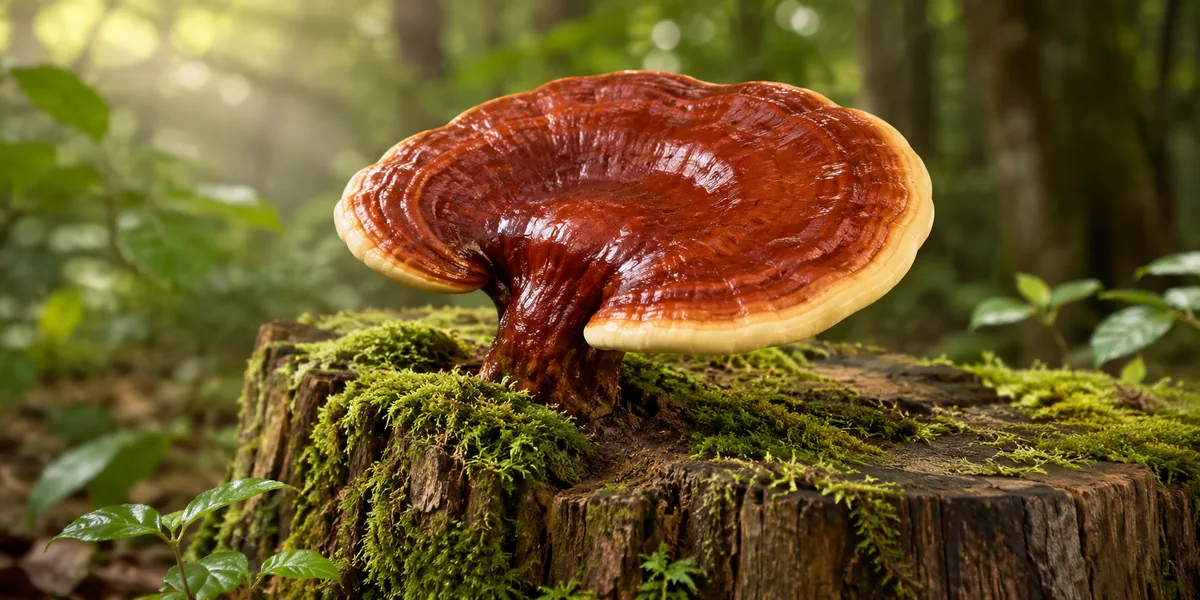
Reishi (Ganoderma lucidum) is a hard, glossy, red-brown mushroom shaped like a fan or a kidney, which grows on wood. It is called lingzhi in China and reishi in Japan. It is too tough and bitter to eat like an ordinary mushroom, so it was traditionally sliced and simmered into a tea.
Reishi is said to have been valued in Chinese and Japanese tradition for a very long time: a Cochrane review describes it as consumed in Asia for over 2,000 years. In that tradition it would have been taken for general wellbeing, often as part of a quiet evening ritual. These are traditional uses, not proven effects, and they say nothing about what a capsule bought online will do. In Arabic shops you may see it as reishi, ganoderma or lingzhi, so read the scientific name on the label to know exactly what you are buying.
What the mushroom contains is better known. It has polysaccharides, the best known being beta-glucans, and triterpenes, which give it its bitter taste. Many products also use its spores, the fine powder the mushroom releases to reproduce. Labels that state the share of beta-glucans and triterpenes give you something to check. This guide covers what research found and what it did not, then how to choose. For the product comparison, see our best mushroom supplements ranking.
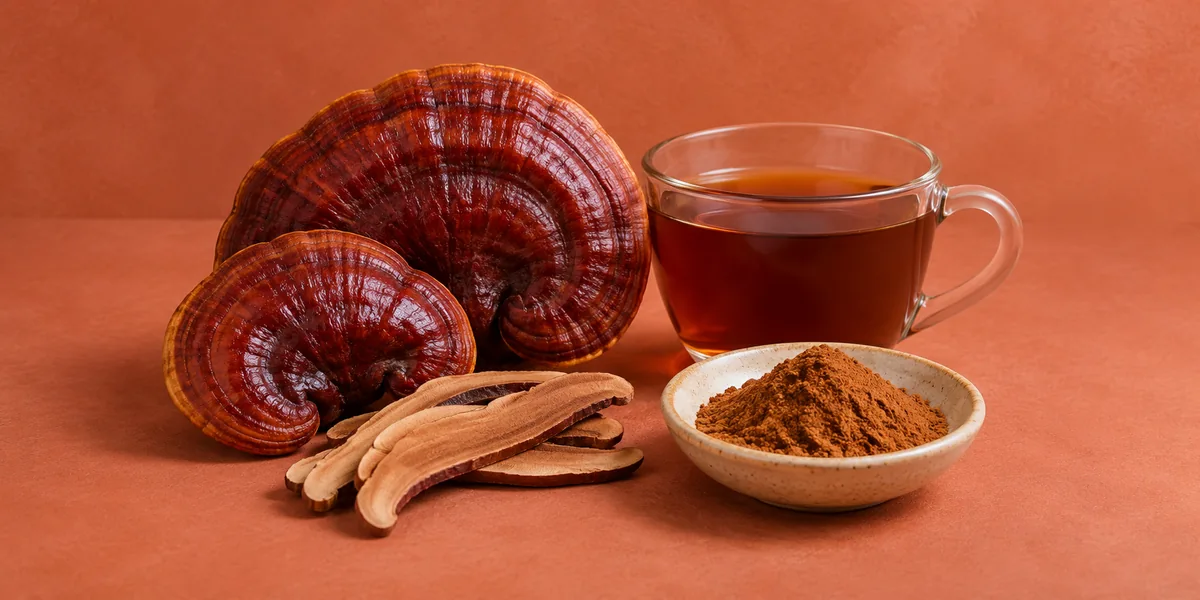
Capsules, powder, spores and tea: the forms of reishi
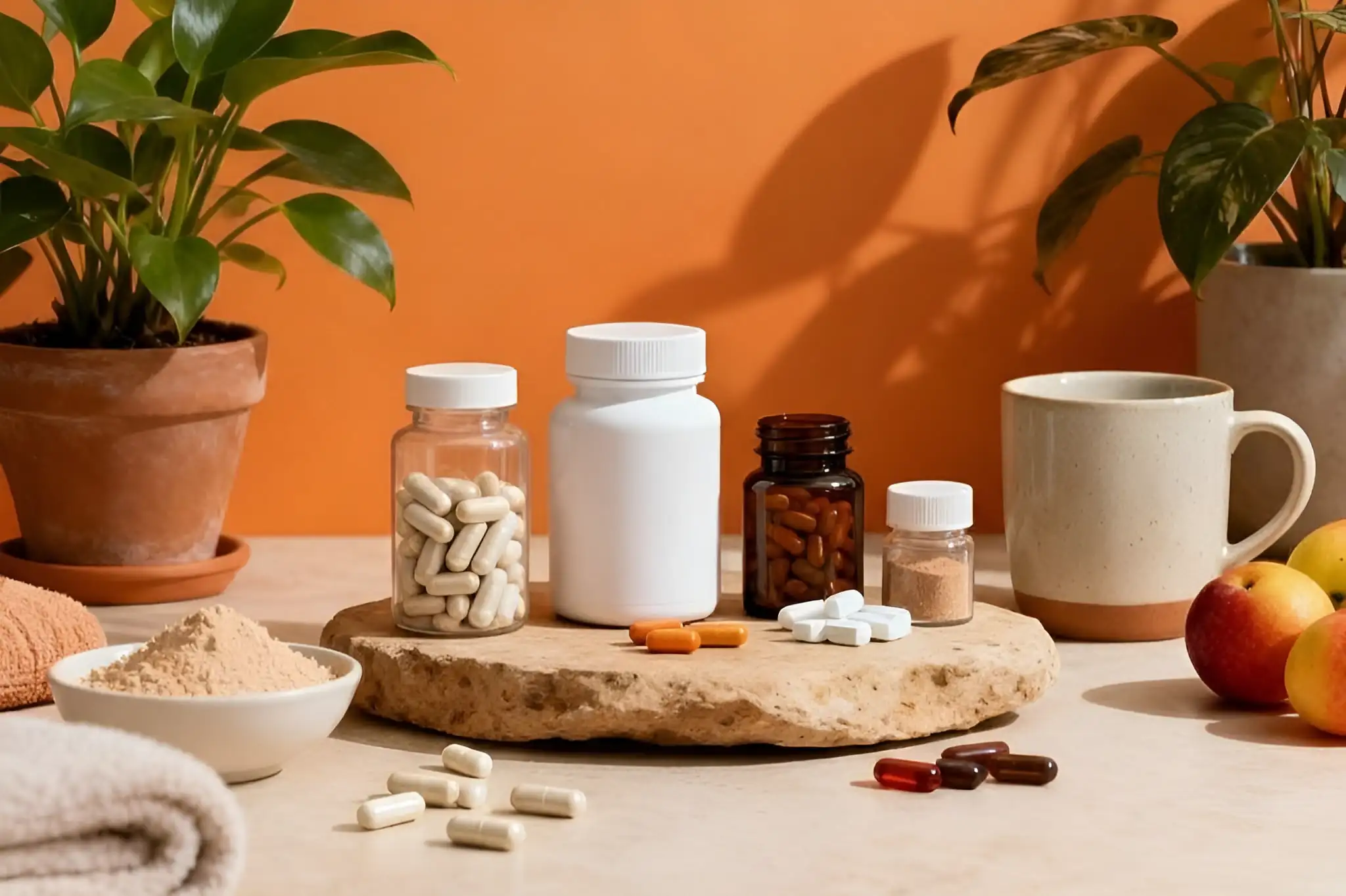
Reishi comes in more forms than most mushrooms, and the form matters, including for safety.
Common forms of reishi and what to watch
| Form | What it is | Upside | Watch out for |
|---|---|---|---|
| Extract capsules | Concentrated extract, often 10:1, in a fixed amount | Clear dose in mg, no bitter taste | Check the ratio and whether beta-glucans are measured |
| Whole mushroom powder | Dried fruiting body, ground | Closest to the raw material | The published liver injury cases involved powders |
| Spore powder or spore oil | Spores, sometimes "broken" to be easier to digest | Sold as a premium product | Can raise the CA72-4 marker in blood tests |
| Slices for tea | Dried pieces simmered in water | The traditional way | Very bitter, amount hard to measure |
| Reishi coffee | Instant coffee with reishi extract | Fits a morning routine | Reishi amount often small or not stated |
Capsules are the most common way to take reishi mushroom, because it is so bitter: few people want large amounts of it in a drink. That is also why most mushroom drinks on the market use other mushrooms, as we explain next.
Reishi coffee: what is actually in the cup?
Reishi coffee is usually instant coffee mixed with an extract of reishi mushroom. Because of the bitterness, the amount of reishi per cup is often modest, and some brands do not give it at all. Before buying, look for three figures: the amount of reishi in mg, whether it is an extract (with its ratio) or a powder, and the caffeine per cup.
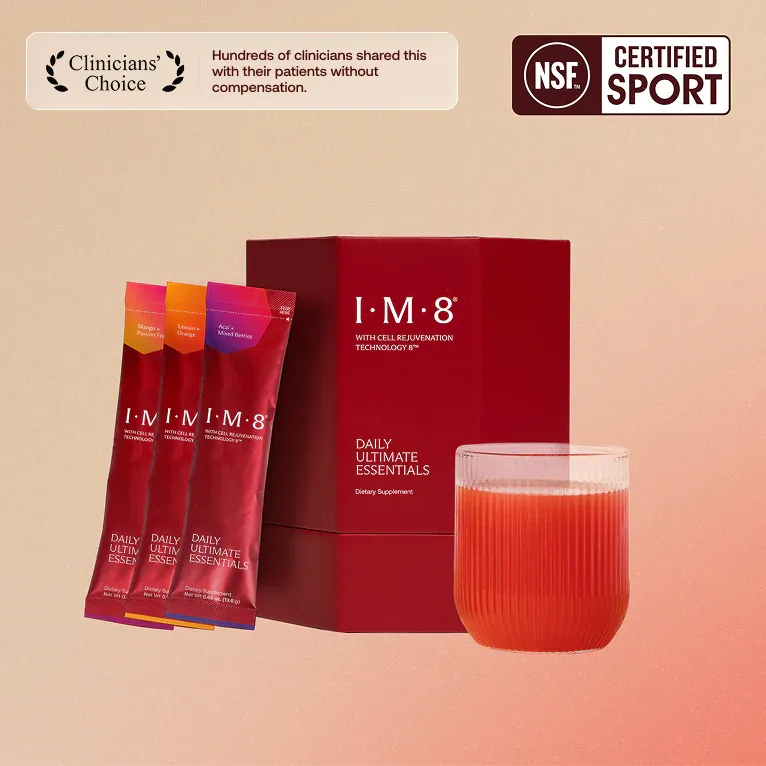
Be careful with names, too. None of the mushroom drinks in our ranking contains reishi in its current recipe: Spacegoods Rainbow Dust, Mush N Go Brainstoorm Coffee and Bonjour Drink Super Mix combine lion's mane, cordyceps and chaga, and Wake changes its mushrooms with the seasons (lion's mane in the current autumn recipe). A "mushroom coffee" is therefore not automatically a reishi coffee. If reishi is what you want, the simplest option is a capsule with a known amount taken alongside your usual coffee, rather than a drink whose dose you cannot check. If you buy a reishi coffee from a local shop, read the Arabic label: it should list the ingredients, the country of origin and the expiry date.
In the Gulf, many people already drink Arabic coffee and tea through the day. Count the caffeine of every cup, and during Ramadan keep any coffee between iftar and suhoor, with water first.
Reishi benefits: what research actually found
Search for reishi benefits and you will see promises about immunity, sleep, stress and much more. Most of the research on reishi mushroom behind them was done in the lab or on animals. The human evidence is limited, and the two Cochrane reviews on Ganoderma lucidum, which pool randomised trials, are much more cautious than shop pages.
Main human evidence on reishi (sources at the bottom of the page)
| Study | Participants and length | What was measured | Published result |
|---|---|---|---|
| Klupp et al., Cochrane review 2015 | 5 trials, 398 participants; usable data from 3 trials in people with type 2 diabetes, 1.4 to 3 g a day for 12 to 16 weeks | Blood sugar, blood pressure and blood lipids | No significant difference on HbA1c, cholesterol, blood pressure or triglycerides; the evidence does not support its use for these risk factors |
| Jin et al., Cochrane review 2016 | 5 randomised trials in people with cancer, of unsatisfying quality | Tumour response, immune markers, quality of life | Not sufficient evidence to justify its use as a first-line cancer treatment; no trial recorded long-term survival |
| Wicks et al., 2007 | 16 healthy volunteers, 2 g of extract twice a day for 10 days | Safety: blood tests, ECG, questionnaires | No adverse effects compared with placebo |
| Kwok et al., 2005 | 40 healthy volunteers, 1.5 g a day for 4 weeks | Clotting tests and platelet function | No impairment of blood clotting |
The limits are worth spelling out. The Cochrane reviews each found only five trials, of uneven or unclear quality, and the authors ask for better ones. The safety trials were tiny and short, from 10 days to 4 weeks. The products tested differ (extracts, powders, doses from 1.4 to 4 g a day), and results for one preparation do not transfer to another. Lab and animal results, which make up most of the literature, cannot be applied to people.
What a label may say. A food supplement is not a medicine. There is no authorised health claim for reishi in the EU register, and in Saudi Arabia and the UAE, as in Europe, a supplement may not claim to treat, cure or prevent a disease. A jar promising stronger immunity, deeper sleep or less stress goes further than the evidence and the rules allow. Worth knowing: insomnia is even listed among the side effects reported with reishi.
Reishi side effects and precautions
In trials, reishi was generally well tolerated. Memorial Sloan Kettering lists dry mouth, dizziness, nausea, insomnia, constipation and itching among reported side effects. In the 2015 Cochrane review, people taking it for four months reported adverse events somewhat more often than with placebo, none of them serious, and the difference was not statistically clear. A word on duration: the longest trials we cite lasted 16 weeks, so nothing reliable is known about taking reishi every day for years. If you decide to try it after speaking to your doctor, do it for a set period and tell them, especially if you have regular blood tests.
The liver is the point to know. In 2004, doctors in Hong Kong reported liver toxicity linked to a reishi powder formulation. In 2007, a Thai team described a fatal case of fulminant hepatitis. In both cases, the patients had taken boiled reishi without trouble, then developed liver damage after one to two months of reishi in powder form, while also taking other treatments. These cases are rare, but they are why the form and the quality of the product matter.
- Pregnancy and breastfeeding: no safety data. Do not take it without your doctor's agreement.
- Children: no data, so not without medical advice.
- Blood thinners and antiplatelet medicines: reishi may increase bleeding risk and may change clotting test results (INR), even though a small trial in healthy volunteers saw no effect. Ask your doctor first.
- Low blood pressure or blood pressure medicines: trials did not show a clear effect on blood pressure, but interactions are poorly studied, so ask before combining.
- Diabetes medicines: ask your doctor or pharmacist before starting.
- Immunosuppressants and autoimmune conditions: caution is advised, and French Mush advises against its reishi in autoimmune conditions.
- Liver disease: avoid it unless your doctor agrees, given the reported cases.
- Surgery: tell your surgeon in advance; many doctors ask you to stop supplements before an operation.
- Blood tests: spore powder can raise the CA72-4 marker; tell your doctor if you take it before a test.
- Mushroom allergy: avoid it.
Stop reishi and see a doctor promptly if you notice yellowing of the skin or eyes, dark urine, unusual tiredness or pain under the right ribs. For any other unusual symptom, speak to a doctor or pharmacist.

Reishi dose: what studies and labels say
There is no official daily reference amount for reishi mushroom. The available benchmarks:
- In studies: 1.4 to 3 g a day for 12 to 16 weeks in the trials pooled by Cochrane in 2015, 1.5 g a day for 4 weeks (2005), and 2 g of extract twice a day for only 10 days (2007).
- On the French Mush label: two capsules a day, each with 400 mg of 10:1 extract, so 800 mg of extract, up to four capsules, with a meal according to the brand.
Extract and whole powder are not comparable gram for gram. Follow your label, start at the low end, do not combine two reishi products, and do not use it for months without telling your doctor.
Storage in Gulf heat. Keep the box closed in a cool, dry place, away from sunlight and out of the car in summer, because heat and humidity spoil powders and capsules faster. Do not use the product after the expiry date on the box.
How to choose a reishi supplement in the UAE and Saudi Arabia
- The part used: fruiting body, mycelium or spores, stated on the label.
- A clear amount: extract weight in mg with its ratio (for example 10:1), not just "reishi".
- Measured compounds: beta-glucans and triterpenes as percentages, ideally with the test method.
- A published certificate of analysis: per batch, covering heavy metals and microbes.
- Sensible claims: a serious product describes its reishi and does not promise immunity or sleep.
- Delivery to your country: the pure reishi in our ranking ships to the UAE, not to Saudi Arabia.
- Where you buy: many reishi listings on large marketplaces come from third-party sellers with no clear label and no certificate. Buying from the brand's own shop lets you match your box with the published batch.
- Price per day, shipping included: a single box with international shipping can cost almost double.
Reishi products we checked for the Gulf
In our best mushroom supplements ranking, only one product actually contains reishi mushroom:
- French Mush Le Reishi Bio: organic reishi extract at 10:1 from fruiting bodies grown in Europe, 400 mg per capsule, with a stated analysis of 24% beta-glucans and 2% triterpenes and certificates of analysis for each batch. A box of 56 capsules (about 28 days) costs EUR 32, about AED 129.28, and code LMC was accepted for 10% off on 18 November 2026 (about AED 116.35). It ships to the UAE (EUR 29, 4 to 10 working days) and Morocco, but not to Saudi Arabia. Our French Mush review has the details.
The other products in the ranking contain no reishi in their current recipes. Mush N Go Focus is a lion's mane capsule, and Spacegoods Rainbow Dust, Mush N Go Brainstoorm Coffee and Bonjour Drink Super Mix combine lion's mane, cordyceps and chaga, and Wake's autumn recipe uses lion's mane. If lion's mane interests you, read our lion's mane guide, and browse all products under functional mushrooms. For readers in Saudi Arabia, we have not found a partner reishi that ships there as of November 2026. If you choose a product sold locally, ask for a full Arabic label and a batch certificate of analysis, and apply the same criteria as above. VAT (5% in the UAE, 15% in Saudi Arabia) and customs duties may be added on delivery.
FAQ
Is reishi mushroom safe?
In short trials, of 10 days to 16 weeks, reishi was generally well tolerated, with mostly minor side effects such as dry mouth, dizziness, nausea or itching. But serious liver injury has been reported with reishi powders, including one fatal case, and long-term safety has not been studied. Avoid it in pregnancy and breastfeeding, and ask your doctor first if you take medication or have a liver condition.
What are the benefits of reishi according to science?
None is established. Two Cochrane reviews found that the available trials do not support its use for cardiovascular risk factors and do not provide sufficient evidence for its use as a first-line cancer treatment, and both judged the evidence weak. There is no authorised health claim for reishi, so a supplement may not promise better immunity, sleep or stress relief.
Can reishi harm the liver?
It is rare but documented. Cases of liver injury were reported in Hong Kong in 2004 and in Thailand, where it was fatal, after people switched from boiled reishi to reishi powder for one to two months; both were also taking other treatments. If you notice yellowing of the skin or eyes, dark urine or unusual tiredness, stop and see a doctor straight away.
Can I drink reishi coffee every day?
Reishi coffee is a food supplement, not an ordinary coffee: follow the label and do not add another reishi product on top. Check the reishi amount in mg and the caffeine per cup, and count your Arabic coffee and tea too. In Ramadan, keep it between iftar and suhoor and put water first.
Can I take reishi with medication?
Ask your doctor or pharmacist first. Reishi may increase bleeding risk with blood thinners and may change clotting test results, and caution is advised with immunosuppressants, blood pressure medicines and diabetes medicines, where interactions are poorly studied. Tell your doctor about it before any surgery.
Can I take reishi during pregnancy?
No, not without your doctor's agreement. There is no safety data in pregnancy or breastfeeding, and French Mush, the brand of the reishi capsules in our ranking, advises against it in both cases, as well as in autoimmune conditions.
Sources
- Klupp et al., Ganoderma lucidum for cardiovascular risk factors, Cochrane Database Syst Rev 2015
- Jin et al., Ganoderma lucidum (reishi) for cancer treatment, Cochrane Database Syst Rev 2016
- Wicks et al., safety and tolerability of Ganoderma lucidum in healthy subjects, Am J Chin Med 2007
- Kwok et al., Ganoderma lucidum and haemostasis in healthy volunteers, Anesth Analg 2005
- Yuen et al., hepatotoxicity due to a formulation of Ganoderma lucidum, J Hepatol 2004
- Wanmuang et al., fatal fulminant hepatitis associated with lingzhi powder, J Med Assoc Thai 2007
- Memorial Sloan Kettering Cancer Center: Reishi Mushroom
- EU Register of nutrition and health claims
- Saudi Food and Drug Authority (SFDA)
Food supplements are not a substitute for a varied, balanced diet and a healthy lifestyle, and they do not treat or prevent disease.

Best Supplement Arabia content is written by our editorial team from the information published by the brands. Scores out of 10 rely on a public grid of 5 criteria*, completed by the editorial team’s judgement.
To support Best Supplement Arabia, links on the site are affiliate links: we may earn a commission when you buy through them, at no extra cost to you. Using the site means you accept our terms of use and our editorial policy.