Best matcha 2026: our ranking of ceremonial matchas that ship to the UAE and Saudi Arabia
Ad: this site contains affiliate links. If you buy through them we may earn a commission, at no extra cost to you. The size of the commission does not decide the ranking.
We compared four matchas from brands that deliver to the Gulf, on origin, cultivar, harvest and price per cup. Yuno comes first with an organic, first-harvest matcha from Yame whose origin is fully named.

Best Supplement Arabia is a site dedicated to food supplements: we help you choose reliable brands with detailed reviews and comparisons based on the information the brands themselves publish. We update our rankings regularly to keep up with the market in the UAE and Saudi Arabia. Our method is built on 5 scoring criteria, designed to compare the quality, transparency and real value of each brand.
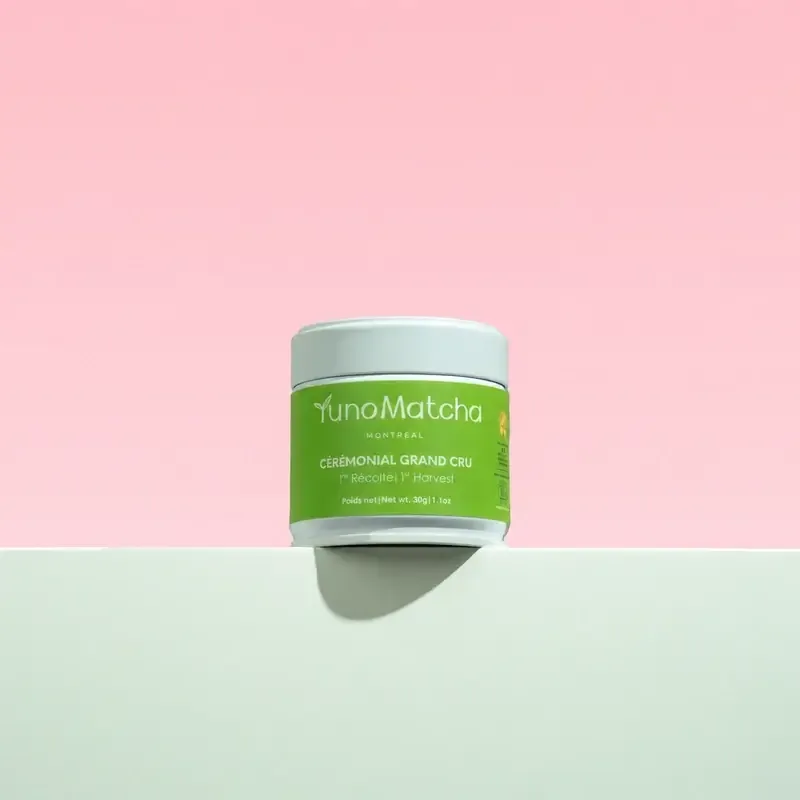
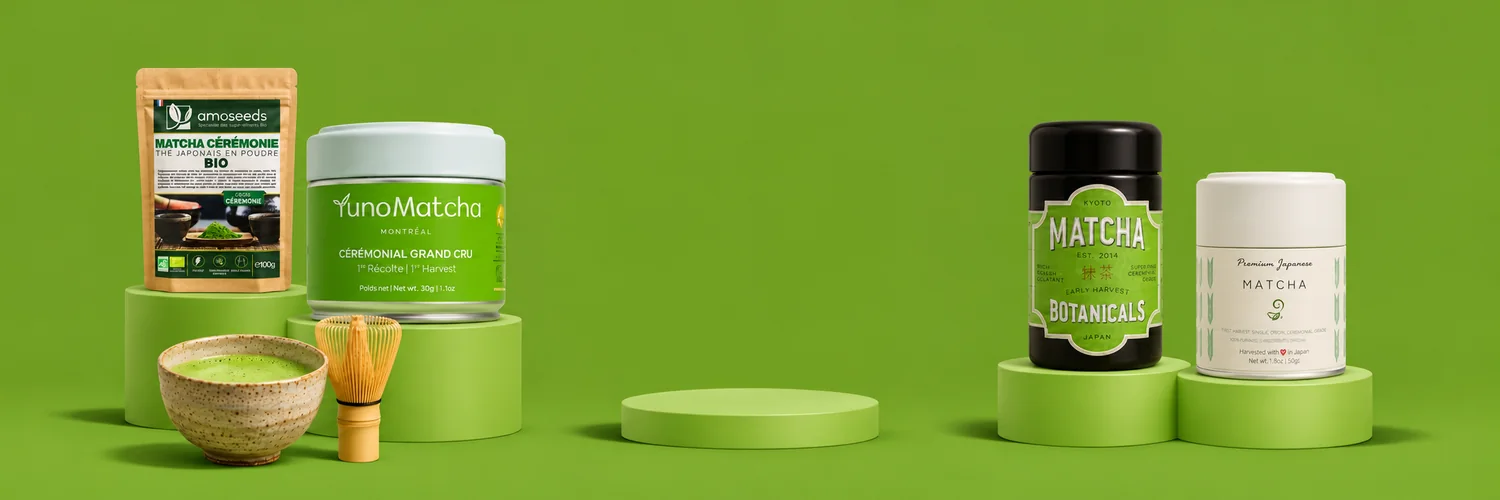
Ceremonial Matcha Grand Cru - Yuno Matcha


A single-cultivar first-harvest matcha from Yame, with its origin spelled out
What is in the tin? 100% organic matcha from Yame, in Fukuoka prefecture, made from a single cultivar, Okumidori, picked at the first harvest of the year. Yuno names the region, the cultivar and the harvest: three details many matcha brands leave out, and the ones that tell you most about taste.
How to drink it: 2 g per cup, whisked in water at about 75 to 80 °C, on its own or as a latte. The 30 g tin makes about 15 cups. It contains caffeine, so keep it for the morning or early afternoon.
Price in the Gulf: on 18 November 2026 the 30 g tin cost AED 144 in the UAE and SAR 148 in Saudi Arabia, or AED 129.60 with the code LMC10: about AED 8.64 per 2 g cup. The 50 g tin was AED 197; the 100 g size was out of stock.
Delivery: Yuno ships to all six Gulf countries, the Maghreb and Egypt. Standard international shipping was 330 MAD (about AED 122) in 6 to 10 days, and express 491 MAD in 4 to 7 days: worth grouping two tins in one order.
- Region, cultivar and harvest named: Yame, Okumidori, first harvest
- Certified organic
- Ships to the whole Gulf, prices in AED and SAR
- -10% with LMC10
- Expensive shipping for a single tin (330 MAD)
- Small 30 g tin, 100 g size out of stock when we checked
- Contains caffeine
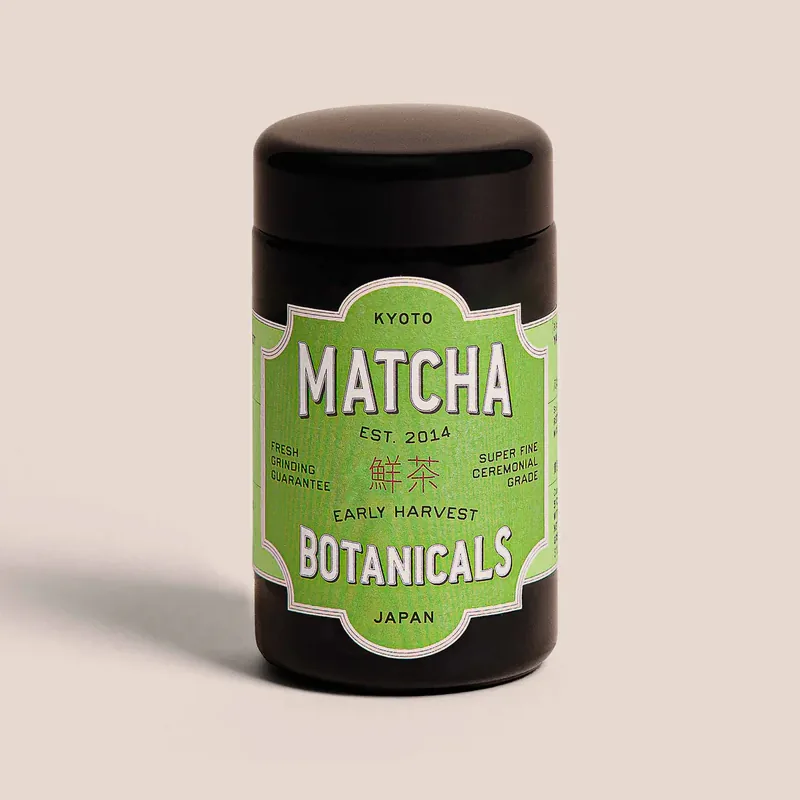

Single Origin Ceremonial Matcha - Matcha Botanicals

A producer's single-field matcha, sold in a 40 g tin instead of the usual 30 g
What is in the tin? Matcha Botanicals describes this matcha as 100% green tea powder from a single cultivar, Okumidori, grown on one of its own fields, Soraku, in the Kyoto region, and finished in its workshop in Kyoto. Single field plus single cultivar is the most precise traceability on this page.
How to drink it: 2 g per bowl, whisked in hot water below boiling, or in a latte. The brand points out that its tin holds 40 g, not 30 g, which helps the price per gram.
Price in the Gulf: on 18 November 2026 the 40 g tin cost AED 185 in the UAE and SAR 189 in Saudi Arabia, or AED 157.25 with the code LMC (15% off in the basket on 23 November 2026): about AED 3.93 per gram and AED 7.86 per 2 g cup. A 100 g size was AED 350.
Delivery: to all six Gulf countries, the Maghreb and Egypt, at 335 MAD (about AED 123) for standard home delivery.
- Single field and single cultivar (Okumidori, Kyoto region)
- 40 g tin, more than the usual 30 g
- Ships to the whole Gulf, prices in AED and SAR
- Several sizes, from 5 g to 200 g
- Few public reviews so far
- No organic certification mentioned for this matcha in what we read
- Shipping cost close to AED 123
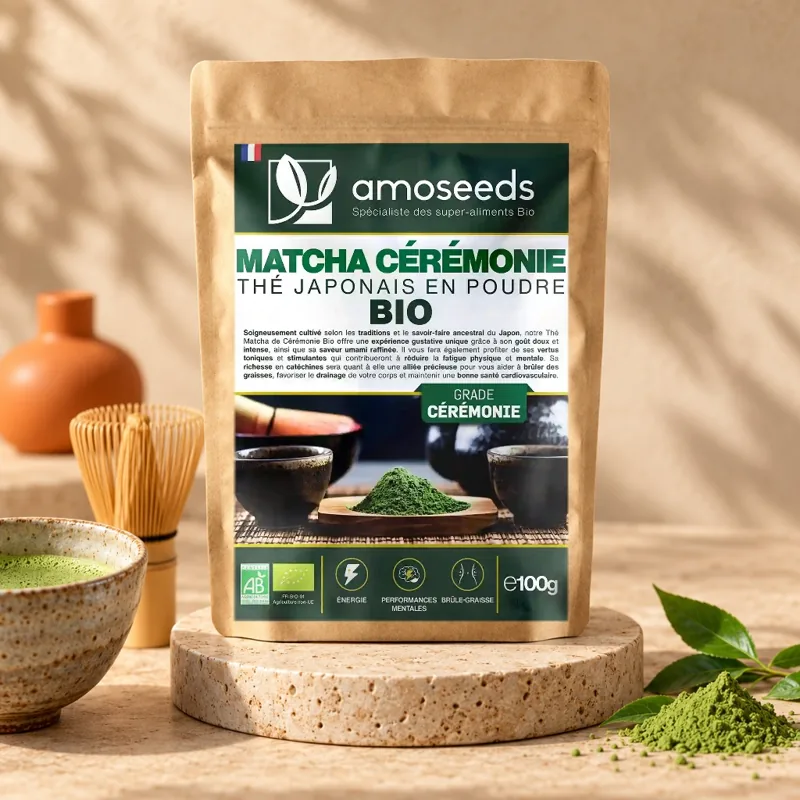

Organic Ceremonial Matcha 100 g - Amoseeds
The lowest price per cup on this page, in a 100 g pouch
What is in the pouch? 100% organic matcha from Japan, sold by a French brand known for organic superfoods. The 100 g size gives about 50 cups of 2 g. Amoseeds names Shizuoka and Kagoshima in Japan but not the cultivar on this product, which is the main gap compared with the two matchas above.
How to drink it: 2 g per cup for a classic usucha, or 4 g for a thick koicha. It works well in lattes, where the price per gram matters most.
Price in the Gulf: Amoseeds shows prices in euros. On 18 November 2026 the 100 g pouch was on offer at 30.39 EUR (usual price 37.99 EUR), about AED 123, or about AED 110.53 with LMC10: roughly AED 1.11 per gram and AED 2.21 per cup.
Delivery: express in 4 to 5 days at 19.99 EUR (about AED 81), free from 190 EUR, to the UAE, Saudi Arabia, Qatar, Oman, the Maghreb and Egypt. It did not list Kuwait or Bahrain.
- Lowest price per cup by far (about AED 2.21)
- Certified organic
- Express delivery in 4 to 5 days
- Large customer base with many public reviews
- Cultivar not named
- Prices in euros only
- A 100 g pouch must be finished within weeks once opened to keep its colour
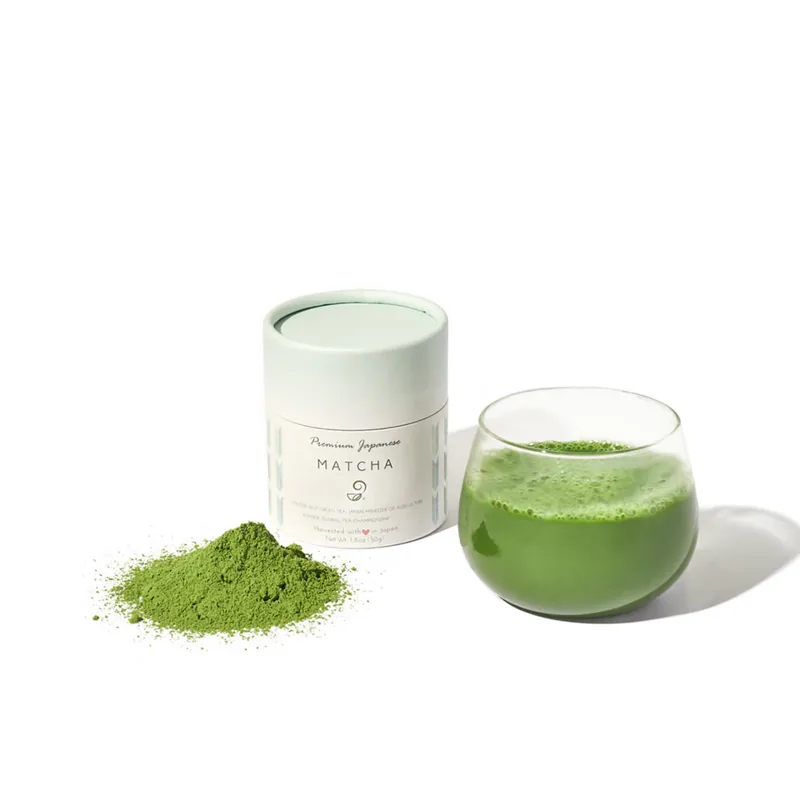

Ceremonial Matcha 50 g - Japanese Green Tea Co

A family farm matcha from Shizuoka, sold by a tea importer
What is in the tube? A ceremonial matcha with no additives from the Arahataen farm in Shizuoka, made from the Yabukita cultivar. The farm uses the traditional Chagusaba method, where grass cut around the tea fields is laid on the soil. The product page also lists a refill without packaging.
How to drink it: 2 g per bowl; the 50 g tube makes 30 to 40 cups. Yabukita gives a smooth, slightly vegetal taste that suits lattes as well as plain matcha. Note that the web address of the page still says "culinary" while the title and label say ceremonial.
Price in the Gulf: on 18 November 2026 the 50 g tube cost AED 146 in the UAE and SAR 149 in Saudi Arabia, or AED 131.40 with the code LMC: about AED 2.63 per gram and AED 5.26 per cup.
Delivery: USPS International Priority with tracking from the United States, at 29.99 USD (about AED 110), to all six Gulf countries, the Maghreb and Egypt.
- Named farm and cultivar (Arahataen, Yabukita)
- 50 g tube, good price per gram
- Ships to the whole Gulf, prices in AED and SAR
- Refill option without packaging
- Shipped from the United States: about AED 110 of shipping
- No organic certification mentioned
- No public review count we could check
Analysis of the formula, doses, active ingredients and how transparent the brand is.
Comparison of the real price by dose, quantity and length of use.
Analysis of customer feedback and overall satisfaction.
Discounts when the brand offers a partner deal.
What is matcha, and why the price varies so much
Matcha is green tea ground into a fine powder. The tea plants are shaded for several weeks before harvest, the leaves are steamed, dried, stripped of stems and veins, then stone ground. Because you drink the whole leaf whisked into water instead of an infusion, a cup of matcha is more concentrated than a cup of green tea, in taste, colour and caffeine.
In Saudi Arabia and the UAE, matcha has moved from specialty cafés to home kitchens: searches for "matcha" run into the tens of thousands every month. That success has brought a flood of cheap matcha powder. Two tins that both say "ceremonial" can differ in price by a factor of five, and in quality just as much. This page ranks four matchas from partner brands that deliver to the Gulf, and explains how to tell a good matcha from a dull one.
The links on this page are affiliate links. Every price was read on the brand's store on 18 November 2026 with the UAE and Saudi Arabia selected.
How we ranked these matchas
We applied our usual five criteria, adapted to tea:
- Origin and transparency (35%): region, cultivar and harvest named; organic certification; producer or importer.
- Proven quality (20%): shading and grinding described, packaging that protects from light and oxygen, analyses when published.
- Price per gram and per cup (20%): with the code applied, in AED and SAR.
- Customer reviews (15%): number and level of public reviews.
- Service and delivery (10%): shipping rate and time to the Gulf, prices in local currency.
We tasted none of these products for this page; the ranking is based on what each brand publishes and on what we could verify on its store. The grid is detailed on our rating method page.
Ceremonial, premium, culinary: what the grades really mean
There is no official, legally defined matcha grade, in Japan or elsewhere. "Ceremonial", "premium" or "barista" are commercial words chosen by each brand. In practice they point to the same differences:
- Harvest: first-harvest leaves (spring) are more tender and sweeter; later harvests are more bitter and cheaper.
- Shading: longer shading raises chlorophyll and amino acids, which gives a brighter green and a rounder, savoury taste.
- Processing: slow stone grinding keeps the powder from heating; fast industrial milling can make it dull and bitter.
So rather than trusting the word on the tin, look at the details behind it: harvest, region, cultivar, and colour once opened. A vivid jade green and a fine, silky powder are good signs; a yellowish or brownish powder usually means a late harvest or old stock.
Japanese matcha: the region and cultivar tell you most
"Japanese matcha" on a tin is a good start, but it is not a guarantee on its own. Most matcha comes from a handful of Japanese regions. Uji, near Kyoto, is the historic one; Nishio, in Aichi, is a major producer; Yame, in Fukuoka, is known for rich, sweet teas; Shizuoka and Kagoshima grow a large share of Japanese tea. No region guarantees quality on its own, but a brand that names it is a brand you can check.
The cultivar matters as much. Yabukita is the most common Japanese tea cultivar, balanced and versatile. Okumidori and Samidori are often chosen for matcha for their colour and sweetness. A "single cultivar" matcha keeps the character of one plant variety; a blend mixes several to keep the taste stable from year to year. Both are valid; the label should simply say which you are buying. On this page, Yuno and Matcha Botanicals name a single cultivar (Okumidori), Japanese Green Tea Co names Yabukita, and Amoseeds does not name one.
Caffeine and L-theanine: what one cup contains
Matcha contains caffeine, and a 2 g serving can contain about as much as a small coffee, depending on the leaf. Yuno, for example, states 30 to 35 mg of caffeine per gram for its barista matcha. The European Food Safety Authority considers up to 400 mg of caffeine a day safe for healthy adults, and up to 200 mg a day during pregnancy and breastfeeding. Count your matcha with your Arabic coffee, karak tea and energy drinks.
Matcha also contains L-theanine, an amino acid found in tea that researchers study for its interaction with caffeine. A 2020 review of matcha's composition describes these compounds and the studies around them, but the evidence remains limited and mostly short term. We do not claim any effect on focus, weight or health: enjoy matcha as a drink, not as a treatment. For caffeine per gram, L-theanine, EGCG and who should be careful, see our guide to matcha benefits and risks.
How to spot a poor matcha before and after buying
Before buying, a few signs should make you cautious:
- "Matcha latte" mixes: many ready-made powders sold in supermarkets are mostly sugar and milk powder, with a small share of matcha. Read the ingredient list: real matcha has one ingredient, green tea.
- A vague origin: "green tea powder" or "Asian matcha" without a country or region usually means a cheaper green tea powder. Good matcha can come from outside Japan, but the label should say where.
- A price that is too low: a 100 g bag of "ceremonial" matcha for the price of a café latte is not ceremonial. First-harvest, shaded leaves cost more to grow.
- No date: matcha fades over months. A tin with no best-before date or harvest year leaves you guessing.
After opening, trust your senses. Good matcha is a bright jade green, smells fresh and slightly sweet, like cut grass or steamed spinach, and dissolves into a smooth foam. A dull olive or yellow colour, a dusty smell, or a harsh bitter taste even with water at the right temperature are signs of a low grade or old stock. If a tin arrives like that, contact the brand quickly: most will answer within their return period.
Matcha, green tea or coffee?
| Matcha | Steeped green tea | Coffee | |
|---|---|---|---|
| What you drink | The whole ground leaf | An infusion of the leaves | An infusion of roasted beans |
| Caffeine per cup | Moderate, varies with dose | Low to moderate | Moderate to high |
| L-theanine | Yes, relatively high | Yes, lower | No |
| Typical home cost per cup | AED 2 to 9 | Less than AED 1 | AED 1 to 4 |
None of these drinks is "healthier" in absolute terms; it depends on how much you drink, when, and what you add. Matcha's strengths are its taste and the ritual. If you are sensitive to caffeine, steeped green tea or a smaller matcha dose of 1 g is a gentler option.
How to prepare matcha properly
- Sift 2 g of matcha (about one level teaspoon) into a bowl to remove lumps.
- Add water at about 75 to 80 °C, around 70 ml. Boiling water makes matcha bitter.
- Whisk briskly in a zigzag with a bamboo whisk (chasen) for 15 to 20 seconds until a fine foam forms.
How to make a matcha latte at home, hot or iced
Many people prefer matcha with milk rather than plain, especially at first. The method is simple, and getting the proportions right matters more than the brand of milk.
- Dose: 2 g of matcha powder (one level teaspoon) for a 250 ml glass. If you want the tea to come through the milk more clearly, go up to 3 g.
- Dissolve first: whisk the matcha with 40 to 50 ml of water at about 75 to 80 °C until no lumps remain. Pouring milk straight onto the dry powder leaves small clumps.
- Add the milk: 150 to 200 ml, warmed without boiling, or cold for an iced version.
Which milk? Full-fat cow's milk gives the creamiest texture. Among plant drinks, oat foams well and tastes neutral, almond is lighter and lets the tea come through, and soy has the most protein. Choose one without added sugar if you can: many plant drinks are already sweetened.
Iced matcha latte for hot days: shake the matcha with 50 ml of cold or lukewarm water in a closed jar for 20 seconds, fill a glass with ice and cold milk, then pour the matcha on top. It takes two minutes. Stir before drinking, as matcha settles at the bottom of the glass.
Sugar and syrups are where a "healthy" matcha latte loses its point. A good matcha needs little or no sweetener; if you add some, keep it light. For everyday lattes, a matcha that costs less per gram makes sense, because milk covers the finer notes.
Storage in a hot climate
Matcha powder is fragile. Light, heat, air and humidity turn it yellow and bitter within weeks. In the Gulf, this matters from the moment the parcel arrives: do not leave it in a hot car or in direct sun. Close the tin tightly after each use, keep it in a cool, dark place, and once opened, ideally in the fridge, letting it come back to room temperature before opening to avoid condensation. Try to finish a tin within one to two months after opening. Large pouches are cheaper per gram, but only if you drink them before they fade.
Price per cup: the real comparison
A tin price says little on its own, because tins of matcha powder go from 30 g to 100 g. We divided the price with the code by the weight, then multiplied by 2 g for one cup. Shipping is listed separately because it changes the picture for a single tin.
| Matcha | Size | Price with code (UAE) | Per gram | Per 2 g cup | Shipping to the UAE |
|---|---|---|---|---|---|
| Yuno Ceremonial Grand Cru | 30 g | AED 129.60 | AED 4.32 | AED 8.64 | 330 MAD (about AED 122) |
| Matcha Botanicals Single Origin | 40 g | AED 157.25 | AED 3.93 | AED 7.86 | 335 MAD (about AED 123) |
| Amoseeds Organic Ceremonial | 100 g | about AED 110.53 | about AED 1.11 | about AED 2.21 | 19.99 EUR (about AED 81) |
| Japanese Green Tea Co | 50 g | AED 131.40 | AED 2.63 | AED 5.26 | 29.99 USD (about AED 110) |
For comparison, a matcha latte in a café in Dubai or Riyadh often costs more than any of these cups, milk included. Shipping is the main cost for a single tin, so grouping two or three tins, or buying with friends, makes the biggest difference.
Which matcha for which use?
You drink matcha plain, whisked in water
Choose a first-harvest, single-cultivar Japanese matcha: Yuno Ceremonial Grand Cru or Matcha Botanicals Single Origin. This is where quality shows most.
You mostly make lattes
Milk softens the taste, so the price per gram counts more. Amoseeds offers the lowest cost per cup, and Japanese Green Tea Co sits in the middle with a named farm.
You are new to matcha
Start with a small tin of a good matcha rather than a big bag of a cheap one: a bitter first cup puts many people off for good. Yuno's 30 g tin is a sensible first purchase.
You are pregnant, breastfeeding or sensitive to caffeine
Matcha contains caffeine. Keep to one cup a day at most and ask your doctor. If you take medication or have a heart rhythm problem, ask before adding matcha to your routine.
Buying matcha in Dubai, the UAE and Saudi Arabia
Whether you are looking for matcha in Dubai, Abu Dhabi or Riyadh, the four brands on this page sell through their own online stores and ship internationally, so the same points apply.
- Delivery: Yuno, Matcha Botanicals and Japanese Green Tea Co ship to all six Gulf countries; Amoseeds ships to the UAE, Saudi Arabia, Qatar and Oman.
- Currency: Yuno, Matcha Botanicals and Japanese Green Tea Co show prices in AED and SAR; Amoseeds shows euros.
- Customs and VAT: duties and VAT (5% in the UAE, 15% in Saudi Arabia) can be added on delivery if the store does not include them.
- Timing: standard international shipping takes 4 to 10 days depending on the brand. If you order matcha in the UAE or Saudi Arabia between May and September, avoid letting the parcel wait at a pickup point in the heat.
Transparency and updates
We read prices, sizes and shipping rates on 18 November 2026. Matcha prices change with harvests and exchange rates, and some sizes go out of stock between harvests. We will update this ranking when a brand changes its product, prices or delivery. PureTea's ceremonial matcha was out of stock on the day we checked and is not ranked for that reason.
Summary table
| Rank | Matcha | Mark | Origin named | Organic | Code |
|---|---|---|---|---|---|
| 1 | Yuno Ceremonial Grand Cru | 8.9 | Yame, Okumidori, first harvest | Yes | LMC10 (-10%) |
| 2 | Matcha Botanicals Single Origin | 8.6 | Kyoto region, Okumidori, single field | Not stated | LMC (-15%) |
| 3 | Amoseeds Organic Ceremonial | 8.4 | Japan | Yes | LMC10 (-10%) |
| 4 | Japanese Green Tea Co | 8.2 | Shizuoka, Yabukita, named farm | Not stated | LMC (-10%) |
Looking for a daily supplement instead? See our best supplement ranking.
Sources
- Kochman et al., health benefits and chemical composition of matcha green tea: a review, Molecules 2020
- European Food Safety Authority, scientific opinion on the safety of caffeine, 2015
- Saudi Food and Drug Authority (SFDA)
- UAE Ministry of Health and Prevention (MOHAP)
Food supplements are not a substitute for a varied, balanced diet and a healthy lifestyle.
Frequently asked questions❓
The questions we get asked most about matcha:
In our ranking of 18 November 2026, number one is Yuno Matcha Ceremonial Grand Cru (8.9): organic, single cultivar Okumidori from Yame, first harvest, and shipped to the whole Gulf. Matcha Botanicals Single Origin comes second for its single-field traceability, and Amoseeds offers the lowest price per cup for lattes.
There is no official definition. "Ceremonial" usually means first-harvest, long-shaded leaves, stone ground into a bright green, sweet powder for drinking plain. "Culinary" or "barista" grades come from later harvests, taste stronger and cost less, and are meant for lattes and baking. Check the harvest, region and colour rather than the word on the tin.
It depends on the leaf and the dose. As a guide, Yuno states 30 to 35 mg of caffeine per gram for its barista matcha, so a 2 g cup can contain about as much as a small coffee. EFSA considers up to 400 mg a day safe for healthy adults and 200 mg during pregnancy. Count matcha with your other caffeinated drinks.
Matcha is a green tea, and like green tea it contains polyphenols and L-theanine that researchers study. But studies on matcha itself are few and short, and they do not prove an effect on weight or health. Enjoy it as a drink. If you are pregnant, take medication or are sensitive to caffeine, ask your doctor first.
Keep it away from light, heat, air and humidity. Close the tin tightly, store it in a cool, dark place, and once opened, preferably in the fridge, letting it warm up before opening to avoid condensation. Never leave it in a hot car. Finish an opened tin within one to two months.
Yes, between iftar and suhoor. Because it contains caffeine, a cup late in the evening can disturb sleep, which is already short during Ramadan. Many people prefer it right after iftar. Drink enough water alongside it, as caffeine adds to fluid loss on hot days.
Our 5 scoring criteria and our commitments
Best Supplement Arabia scores out of 10 are based on a public grid of 5 criteria, completed by the editorial team’s judgement. Our content is written by the editorial team from the information published by the brands.
Verifiable formula and doses (35%)


Proven quality and traceability (20%)
Price per serving (20%)
Customer reviews (15%)